
The Guardhouse Viewpoint: The Classic Machu Picchu View
The upper terrace overlook by the Casa del Guardián — the postcard frame of Machu Picchu. Which circuit reaches it, when the light is best, and how to plan the shot you came for.

Photo: Jair Garciaferro / Unsplash
- ✓The Guardhouse (Casa del Guardián) sits high on the agricultural terraces — its overlook is the source of the single most famous photograph in South America.
- ✓From here the whole citadel falls away below you, with Huayna Picchu rising sheer behind it: the frame on every postcard, poster and passport stamp.
- ✓You reach it on the upper, panoramic routing — the classic and panoramic circuits pass it; verify your route includes the overlook before you book.
- ✓Early light and shifting cloud are the gamble and the gift; dry-season mornings (May–September) are clearest but also the busiest at the rail.
The view you already know
You have seen this view a thousand times before you ever arrive: the green city of stone spread across its saddle, the agricultural terraces stepping down on the left, the urban sector packed tight in the middle, and behind it all the great green tooth of Huayna Picchu rising into the cloud. That photograph — the one on the poster, the book cover, the airline advertisement — is taken from a single stretch of path on the upper terraces, beside a small thatched stone building the guides call the Casa del Guardián, the Guardhouse.
There is a particular happiness in standing where the picture was made and finding it real. No camera quite prepares you for the scale: how far below the citadel sits, how steeply the mountains crowd in, how the morning mist pours over the ridges and then burns off to reveal the whole thing at once. This is the view people cross the world for, and the Guardhouse is its threshold — the first place most visitors stop, gasp, and reach for a camera.

What the Guardhouse actually is
The building itself is modest — a small, three-walled stone structure with a reconstructed thatched roof, perched at the top of the terraced fields where the path to the Sun Gate begins. The open side faces out over the citadel, and its position is deliberate: from here a watcher could see anyone approaching along the Inca Trail from the east, anyone working the terraces below, and the whole urban sector beyond. Archaeologists call it a guardhouse or gatehouse for exactly that reason; some read it as a control point for the agricultural sector, others as a checkpoint on the road into the sanctuary.
Beside it sits the so-called Funerary Rock, a large carved stone whose purpose is still debated — possibly a place where the dead were prepared, possibly a ceremonial platform. Whatever its function, the spot was clearly important to the Inca, and it remains the natural high vantage from which to read the entire city below. You are not just at a photo stop; you are standing on the threshold the Inca themselves used to survey their mountain sanctuary.
- A small three-walled stone building with a reconstructed thatched roof, at the top of the agricultural terraces.
- Positioned to watch the eastern approach, the terraces and the urban sector — a control point on the way in.
- The adjacent Funerary Rock is a carved ceremonial stone whose exact use is still debated.
- The path to Intipunku, the Sun Gate, sets off from just beside it.

Which circuit reaches the overlook
Here is the planning catch that trips up so many first-timers: under the timed-entry circuit system reorganised by Peru's Ministry of Culture in 2024, not every ticket reaches the Guardhouse overlook. The classic postcard frame sits on the upper, panoramic side of the sanctuary, and you can only stand there if your ticket's circuit and route include the upper terraces. The panoramic and classic circuits pass the overlook; the lower, riverside routing — the one that reaches the Temple of the Sun and the peak climbs — generally does not give you the high, full-citadel view.
This matters more than almost any other decision you make at the site, because you cannot change your route once you are inside. The circuits are largely one-way, and the order you walk the citadel is fixed when you buy the ticket. If the classic view is the reason you came — and for most people it is — choose a circuit that includes the upper terrace overlook, and confirm the current routing at the point of sale, because the official definitions have been revised before and may shift again. Verify before you book.
- The Guardhouse overlook sits on the upper/panoramic routing — the classic and panoramic circuits pass it.
- The lower riverside routing reaches the Temple of the Sun and the peaks but not the high overlook — you usually cannot have both on one ticket.
- Routes are largely one-way and fixed when you buy — you cannot switch at the gate.
- Confirm the current circuit definitions before booking; the rules have changed before — verify.

Timing the light and beating the crowd
The Guardhouse faces roughly east-to-south over the citadel, which makes the morning the prime window: the early sun lifts off the eastern ridge and floods the city with warm, raking light while the western faces of the buildings catch the glow. It is also when the famous cloud theatre plays out — mist filling the gorge at dawn and then peeling back to reveal the citadel piece by piece. There is no guarantee on any given morning; a dry-season dawn can still sit socked in for an hour, then clear in minutes. That uncertainty is part of the romance, but build slack into your plan so a slow-clearing morning does not cost you the shot.
The crowd is the other variable. The overlook is narrow and everyone wants the same frame, so the rail can fill quickly once the first buses arrive. An early entry slot puts you there before the mid-morning crush; a later slot can mean clearer skies but more people. If photography is the point, accept the trade-off consciously rather than discovering it at the rail. And remember the practical floor of any timing plan: you need a valid timed ticket for your window, the passport you booked with is checked at the gate, and the early buses up from Aguas Calientes leave well before dawn.
- Morning light is best — warm, raking sun and the dawn cloud theatre over the gorge.
- No clear-sky guarantee, even in dry season; cloud can clear in minutes or linger an hour. Build in slack.
- The overlook rail is narrow and popular — early slots beat the crush; later slots can be clearer but busier.
- Carry the passport you booked with; it is checked at the gate with your timed entry.
Getting the photograph
The classic composition is almost made for you by the landscape: stand on the path above the terraces, frame the citadel below with Huayna Picchu rising behind, and let the terraces lead the eye in from the lower left. A figure in the foreground — a llama grazing the terraces, a hat-and-poncho silhouette — gives the scale that flat photographs lose. Shoot a vertical for the poster crop and a horizontal for the full saddle and both peaks. If you want the iconic frame without other visitors in it, the earliest entry of the day or the gap just before closing are your best chances.
A word on the resident llamas: they roam the upper terraces freely and have an uncanny talent for wandering into the perfect spot. They are wild enough to ignore you and tame enough to pose; keep a respectful distance, do not feed them, and let them make your photograph for you. Drones are not permitted at the site, and tripods are generally discouraged on the narrow paths, so plan to shoot handheld and travel light.
- Classic frame: citadel below, Huayna Picchu behind, terraces leading in from the lower left.
- Add a figure or a grazing llama for scale; shoot both vertical and horizontal.
- Earliest entry or the last slot before closing give the cleanest, least crowded frames.
- No drones; tripods are awkward on the narrow paths — plan to shoot handheld.
At a glance
A quick reference before you choose the circuit that reaches the overlook. Exact routing, capacities and slot rules change with official policy — treat what you find on official sources as current and verify before booking.
- What it is: the upper terrace overlook beside the Casa del Guardián (Guardhouse) — the classic postcard viewpoint.
- The view: the full citadel below with Huayna Picchu behind; terraces stepping down on the left.
- Access: the upper/panoramic routing — classic and panoramic circuits pass it; verify your route includes it.
- Effort: easy — a short climb up the terrace path from the entrance; the hardest part is the altitude and the crowd.
- Best light: morning, for warm raking sun and the dawn cloud theatre — but no clear-sky guarantee.
- Who it suits: everyone — this is the view most people come for; only skip the overlook if your ticket is on the lower riverside circuit.
Don't leave the view to chance
Of all the ways to be disappointed at Machu Picchu, the most common and the most avoidable is to travel across the world, book a ticket without checking the routing, and find yourself on the lower circuit looking up at the famous overlook you cannot reach. The view is not automatic; it is a choice you make at the moment of booking. Lock the upper-circuit route first, then build the train, the bus and your night in Aguas Calientes around it.
Do that, give yourself a clear morning slot and a little patience with the cloud, and the Guardhouse will hand you the picture you have carried in your head for years — only bigger, quieter and more astonishing than any photograph let on. It is the threshold of the sanctuary, and the moment you stand there is the moment the whole long journey resolves into a single view.
Related guides

Best Circuit for the Classic Machu Picchu Photo
Which routes deliver the iconic postcard view, when the light is best, how mist and season play, and how to avoid the photo disappointment that catches first-timers.
Read guide
Route 2B: The Lower-Terrace Classic
Route 2B is the shorter, gentler of Circuit 2's two classic sub-routes — the lower-terrace variant that still reaches the postcard view. How it compares with 2A on terrace views, flow, crowds, mobility and first-timer fit.
Read guide
Machu Picchu Entry Times & Time Slots
How the timed-entry system works, morning versus midday versus afternoon, matching your slot to the train and the bus, and why late arrivals fail.
Read guideMore in Highlights
6
A Rainy Day at Machu Picchu
Rain at the citadel is normal, not a disaster — how to dress for cloud forest, which circuits cope best, how to build train buffers, the Aguas Calientes backups, and why mist makes the most haunting photographs of all.
Read guide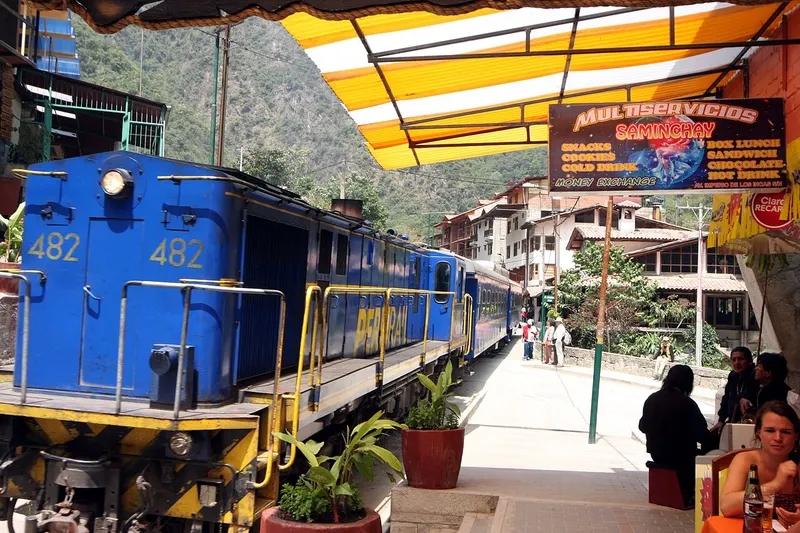
Aguas Calientes (Machu Picchu Pueblo): The Complete Guide
Aguas Calientes — officially Machu Picchu Pueblo — the cloud-forest town at the foot of the citadel. Where to sleep, how the trains and buses connect, the food, the hot springs, luggage, and how long to stay for a calmer entry.
Read guide
Around the Site: Machu Picchu Up Close
The hub for the world immediately around the citadel — what to see inside it, the town of Aguas Calientes below, where to stay, the first buses up, the hot springs, the restaurants, and how to visit responsibly.
Read guideBest Photography Spots at Machu Picchu
Where the great Machu Picchu photographs are actually made — the classic upper-terrace frame, the llamas, the morning cloud, and which circuit reaches each angle. Plus the sunrise myth and what you simply cannot access.
Read guide
Budget hotels for Machu Picchu
Better-value places to sleep along the Machu Picchu route — honest guesthouses and well-run hostels in Cusco, Ollantaytambo and Aguas Calientes — chosen to stretch the trip without wrecking the altitude ladder or the citadel-morning logistics.
Read guide
Luxury hotels for Machu Picchu
The top-end stays that string together a polished Machu Picchu journey — restored monasteries and oxygen-equipped suites in Cusco, hacienda-and-spa retreats in the Sacred Valley, and the one true luxury option at the gate of the citadel itself.
Read guide