The Sacred Rock (Roca Sagrada): Guide & Route
The Sacred Rock at Machu Picchu — a great flat-faced stone that mirrors the mountain behind it, the gateway to Huayna Picchu, and the pivot point of the lower sector. What it is, the circuit that reaches it, and how to read it.
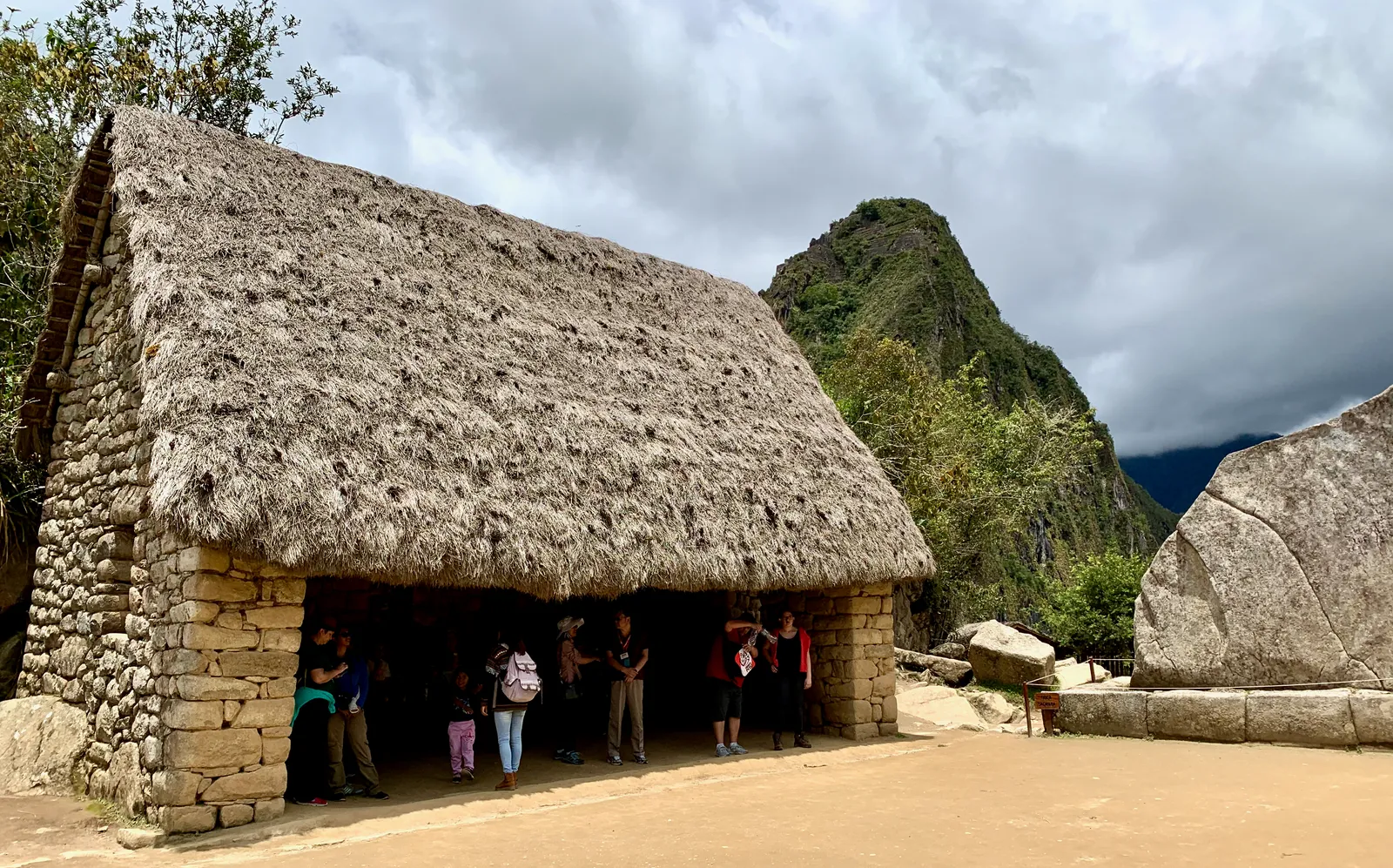
Photo: F Delventhal / Wikimedia Commons · CC BY 2.0
- ✓The Sacred Rock (Roca Sagrada) is a large, flat, vertical slab set on a low base in the lower sector, its outline echoing the mountain ridge that rises directly behind it.
- ✓It marks the northern end of the urban core and the threshold to the Huayna Picchu trail — you pass it on the way to that climb.
- ✓It is reached on the lower routing — Circuit 3 — not the upper panoramic path; choose the right circuit before you book.
- ✓There is no climbing or touching: you view it from the route, like every stone in the citadel, and the meaning is read in its silhouette, not signage.
A stone shaped like its mountain
Near the northern edge of Machu Picchu's urban heart, where the terraces give way to the saddle that leads toward Huayna Picchu, stands one of the most quietly eloquent objects on the whole site: a single great slab of rock, roughly three metres high and several wide, set upright on a low carved plinth. The Inca did not move it there or shape its outline by accident. Look past the rock to the mountain rising behind it — the ridge the Inca called Yanantin — and the kinship is unmistakable. The stone repeats the line of the peak, a small echo of a vast horizon, the landscape brought inside the city in miniature.
This is the heart of what made the Inca relationship with stone so unlike our own. They did not see rock as raw material to be conquered into shape. They saw certain stones, certain outcrops, certain mountains as wak'a — sacred presences, alive, worthy of address. The Sacred Rock is the citadel's clearest lesson in that worldview: a monument whose entire point is to rhyme with the land around it, so that to stand before it is to stand before the mountain itself.
At a glance
The essentials before you build the Sacred Rock into your visit. The circuit system was reorganised by Peru's Ministry of Culture in 2024 and official routing can be revised again — treat the rules below as the current shape of things and verify the exact routing at the point of sale.
- What it is: Roca Sagrada, a large flat-faced standing stone on a low plinth whose silhouette mirrors the mountain ridge behind it.
- Where: the northern end of the urban sector, on the saddle toward Huayna Picchu.
- Access: reached on the lower 'royal' routing (Circuit 3) and on the classic Circuit 2 — but not on the short panoramic-only routing. Confirm your exact route on the official site before booking.
- Effort: none beyond the walk through the lower sector — it sits on the level path, not up a climb.
- Etiquette: viewed from the route only; no touching, climbing or stepping onto it.
- Pairs with: the Huayna Picchu trail (which begins just beyond it, on Circuit 3) and the Temple of the Condor and Sun Temple in the same lower sector.
Which circuit reaches the Sacred Rock?
This is the question that decides whether you see it at all. Under the post-2024 system, every ticket is tied to one of three circuits and a numbered route, and the path is largely one-way — you cannot wander back to a stone you missed. The Sacred Rock sits in the lower, northern half of the citadel, the same zone that holds the Temple of the Condor and the trailhead for Huayna Picchu. It is reached on the lower 'royal' routing (Circuit 3) and is also included on the classic Circuit 2 — but the short panoramic-only routing that delivers the high terrace overlook does not bring you down to it.
So if the Sacred Rock matters to you — and especially if you want to climb Huayna Picchu, whose route (Circuit 3, Route 3-A) begins just beyond it — book a ticket whose circuit and route reach it, and book it knowing the route in advance. The cardinal rule of Machu Picchu planning applies here as everywhere: the path is chosen when you buy the ticket, not at the gate. Confirm the current circuit definitions when you purchase, because the Ministry has revised them before and may again.
- The Sacred Rock is reached on Circuit 3 (the lower 'royal' routing) and on the classic Circuit 2.
- The short panoramic-only routing does not reach it.
- Huayna Picchu permits attach to Circuit 3 (Route 3-A), and its trail starts just past the Sacred Rock.
- Routing can change with official policy — verify at the point of sale.

How to read it when you arrive
Most visitors walk straight past the Sacred Rock without registering what it is, because it does not announce itself. There is no temple, no carved doorway, no obvious grandeur — just a large stone on a plinth in an open space, often with people clustered around it taking photographs of the wrong thing. The trick is to slow down and use your eyes the way the Inca intended. Stand on the flat side of the rock and look beyond it to the mountains. The stone's upper edge traces the ridgeline behind it. That deliberate rhyme is the whole monument.
Around the rock is an open plaza, and to one side the control point where Huayna Picchu permit-holders register before their climb. The setting is part of the meaning: this is a threshold, the seam between the dense, lived-in city to the south and the wild peak to the north. The Inca built no wall here, only a stone that holds the place. Give it a minute of attention before the crowd carries you on, and it becomes one of the most memorable things at the site precisely because it asks nothing of you but to look.
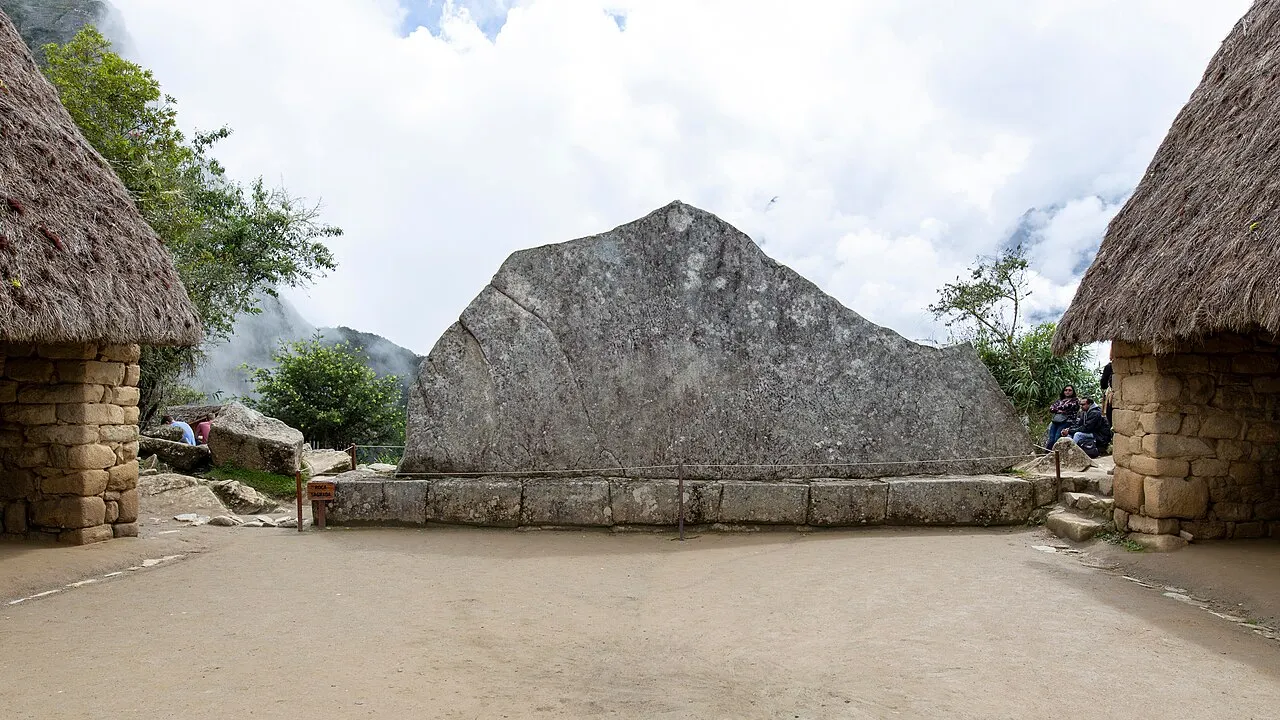
- Stand on the flat side and look past the rock to the mountain — the silhouettes match.
- The open plaza around it is the threshold between the urban core and the Huayna Picchu trail.
- The Huayna Picchu sign-in control sits beside it; permit-holders register here.
- No touching or climbing the stone — it is read by sight, from the path.
The Sacred Rock and Huayna Picchu
The two are bound together in practice as well as in spirit. The trail up Huayna Picchu — the steep sugarloaf peak that towers over every postcard of Machu Picchu — begins at the far side of the plaza just past the Sacred Rock. If you hold a Huayna Picchu permit, the rock is the last set piece of the main citadel you pass before the climb, a fitting pause to look up at the mountain you are about to ascend. If you do not hold a permit, the rock is as far north as the route takes you, and the peak stays a presence above rather than a path beneath your feet.
Because the permit, the circuit and the Sacred Rock all sit on the same lower routing, planning them together is the sensible move. Decide whether Huayna Picchu is in your plan first, since its permits sell out earliest of everything at the site; that single decision pulls the circuit, the entry time and the Sacred Rock into place behind it.
Should you make a point of seeing it?
If you are already on the lower circuit — for the Temple of the Sun, the Condor, or a Huayna Picchu climb — the Sacred Rock costs you nothing and rewards a minute's attention with one of the site's most elegant ideas. It is the kind of thing that, once you have understood it, you cannot unsee: the city speaking the language of its mountains. For travellers drawn to the meaning of Machu Picchu rather than only its silhouette, it is a quiet highlight.
It is not, however, a reason to switch circuits if your heart is set on the classic panoramic overlook, which lives on the upper path. The honest answer is that the Sacred Rock is a bonus of the lower routing, not a destination you would reshape the whole visit around. Choose your circuit for the experience you most want — the postcard view above, or the temples and the Huayna Picchu approach below — and let the Sacred Rock be the reward of whichever lower path you take.
Related guides

Huayna Picchu guide
The sheer green peak behind the postcard — how the add-on permit works, the route up, the exposure and the fitness it demands, and whether the famous climb is worth it.
Read guide
Circuit 3 Royalty guide
The lower 'Royalty' circuit that hugs the citadel's urban core — the gateway to Huayna Picchu, Huchuy Picchu and the Great Cavern, and the path most Inca Trail walkers finish on.
Read guide
Machu Picchu Highlights: What You'll See
The set pieces inside the citadel — the Guardhouse overlook, the Temple of the Sun, the Intihuatana, the Sacred Rock, the Sun Gate and the Inca Bridge — and which circuit and route reaches each one.
Read guideMore in Highlights
6
A Rainy Day at Machu Picchu
Rain at the citadel is normal, not a disaster — how to dress for cloud forest, which circuits cope best, how to build train buffers, the Aguas Calientes backups, and why mist makes the most haunting photographs of all.
Read guide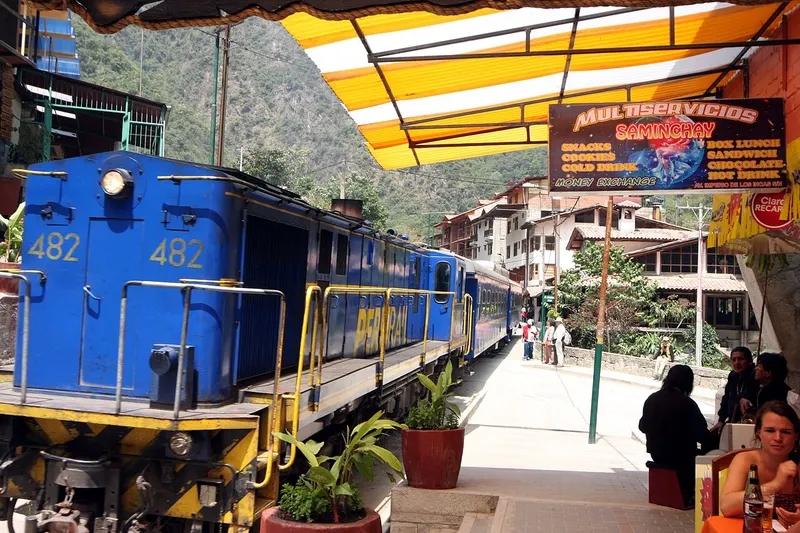
Aguas Calientes (Machu Picchu Pueblo): The Complete Guide
Aguas Calientes — officially Machu Picchu Pueblo — the cloud-forest town at the foot of the citadel. Where to sleep, how the trains and buses connect, the food, the hot springs, luggage, and how long to stay for a calmer entry.
Read guide
Around the Site: Machu Picchu Up Close
The hub for the world immediately around the citadel — what to see inside it, the town of Aguas Calientes below, where to stay, the first buses up, the hot springs, the restaurants, and how to visit responsibly.
Read guide
Best Photography Spots at Machu Picchu
Where the great Machu Picchu photographs are actually made — the classic upper-terrace frame, the llamas, the morning cloud, and which circuit reaches each angle. Plus the sunrise myth and what you simply cannot access.
Read guide
Budget hotels for Machu Picchu
Better-value places to sleep along the Machu Picchu route — honest guesthouses and well-run hostels in Cusco, Ollantaytambo and Aguas Calientes — chosen to stretch the trip without wrecking the altitude ladder or the citadel-morning logistics.
Read guide
Luxury hotels for Machu Picchu
The top-end stays that string together a polished Machu Picchu journey — restored monasteries and oxygen-equipped suites in Cusco, hacienda-and-spa retreats in the Sacred Valley, and the one true luxury option at the gate of the citadel itself.
Read guide