
The Temple of the Sun (Torreón): A Visitor's Guide
The curved solar tower at the heart of Machu Picchu — its solstice-aligned window, the royal mausoleum beneath it, the finest masonry on the site, and which circuit reaches it.
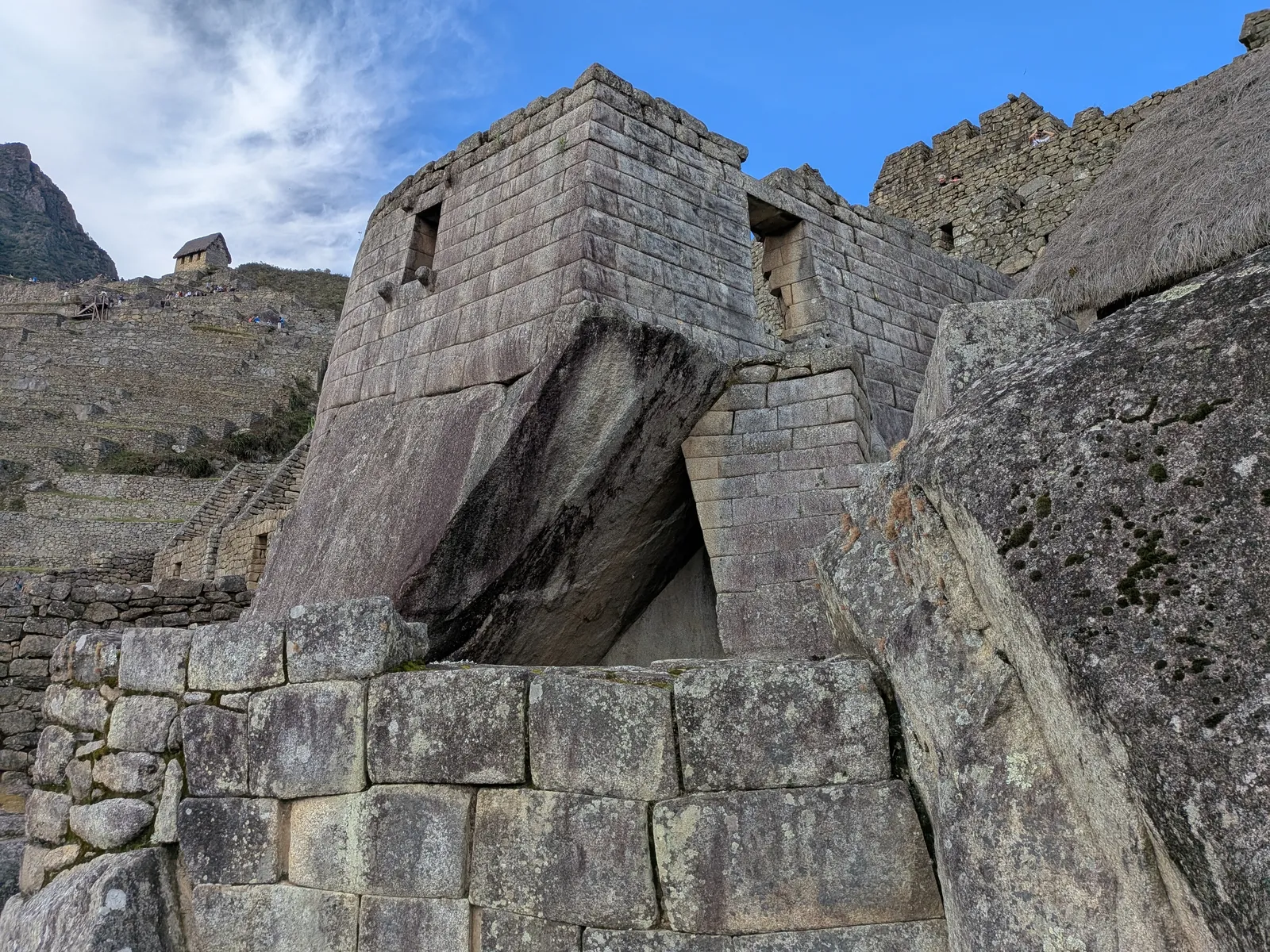
Photo: Gedankenstuecke / Wikimedia Commons · CC BY-SA 4.0
- ✓The Temple of the Sun — the Torreón — is the only curved building at Machu Picchu, its tapering granite courses among the finest masonry the Inca ever cut.
- ✓A trapezoidal window is aligned to the June-solstice sunrise, casting light across a carved ceremonial stone inside — solar astronomy built into the wall.
- ✓It rises directly from carved bedrock, and beneath it lies the so-called Royal Tomb, a cave-shrine of stepped niches and superb stonework.
- ✓It sits in the lower urban sector; reaching it depends on a circuit/route that passes the temple — verify your routing before booking.
A tower built to catch the sun
Of all the buildings at Machu Picchu, the Temple of the Sun is the one that makes visitors fall quiet. It is the only curved structure on the whole site — a smooth, tapering granite tower that the Spanish chroniclers would have called a torreón — and its masonry is in a different class from everything around it: blocks shaped and polished and set so precisely that the joints between them will not take a knife. The Inca reserved this quality of stonework for what mattered most, and here it wraps a sacred outcrop in a perfect curve of stone.
The temple was built to do astronomy. Set into its wall is a trapezoidal window aligned to the rising sun at the June solstice; on that morning the first light falls through the opening and strikes a carved ceremonial stone inside the tower, marking the turning of the agricultural year. A second window is thought to mark the December solstice. This is not decoration — it is an instrument, a building that measures the sky, and standing beneath it you are looking at one of the clearest statements the Inca left of who they were and what they worshipped.
The Royal Tomb beneath the tower
The Temple of the Sun rises straight out of a great granite outcrop, and the Inca did not flatten the rock — they carved into it, working temple and bedrock into a single sculpted whole. Beneath the tower, in the natural cave under the outcrop, lies the structure usually called the Royal Tomb or Royal Mausoleum. No royal mummy was ever found inside, so the name is a guess, but the space is unmistakably sacred: a cave shrine of stepped niches and a carved stone staircase motif, the famous Andean three-step symbol that recurs across Inca religious sites.
Look at how the stonework follows the living rock here. The Inca treated certain outcrops as huacas — sacred objects in themselves — and rather than impose stone on the landscape, they carved with it, letting the bedrock dictate the form. The result is one of the most atmospheric corners of Machu Picchu: cool, shadowed, intricately worked, the temple above catching the sun while the tomb below holds the dark. Reading the two together — solar tower and earth shrine, light and stone — is reading the Inca cosmos in miniature.
- The tower rises from carved living bedrock — temple and outcrop worked into one form.
- Beneath it, the cave-shrine called the Royal Tomb: stepped niches and the Andean three-step motif.
- No royal mummy was found there — the name is traditional, the sacredness unmistakable.
- Together they pair solar astronomy above with an earth-shrine below.
Which circuit reaches it
Here is the planning reality you must build around. Under the timed-entry circuit system reorganised by Peru's Ministry of Culture in 2024, the Temple of the Sun sits in the lower urban sector, and you reach it only on a circuit and route that passes through that part of the citadel. Broadly, this is the lower, royal routing — the same side of the sanctuary that carries the Huayna Picchu and Machu Picchu Mountain add-on climbs — rather than the upper, panoramic routing that delivers the classic Guardhouse overlook.
That means a real choice, because the circuits are largely one-way and fixed when you buy the ticket. A visitor whose heart is set on the Temple of the Sun and the Royal Tomb generally takes a lower circuit; a visitor who wants the postcard overlook takes an upper one — and a single ticket rarely gives you both in full. Decide which matters more before you book, confirm the current routing at the point of sale, and remember the official circuit definitions have been revised before and may change again. Verify.
- The Temple of the Sun sits in the lower urban sector — reached on the lower/royal routing.
- That is the same side that carries the Huayna Picchu and Machu Picchu Mountain climbs.
- The upper/panoramic routing gives the Guardhouse overlook but not the close approach to the temple — one ticket rarely gives both.
- Routes are largely one-way and fixed at purchase; confirm current routing — verify.


Seeing it well: light, distance and a guide
You do not enter the Temple of the Sun — the tower and the Royal Tomb are roped off to protect the masonry, so you view them from the path that passes close alongside. That is closer than it sounds: the route runs right beside the curved wall, near enough to read the precision of the joints and to see down into the carved tomb beneath. Pause here rather than passing through. The quality of the stonework rewards a slow look, and the way the temple grows out of its bedrock only reveals itself when you stop and trace the line where carved rock becomes built wall.
Light shapes the experience. The solstice-aligned windows mean morning is when the temple is doing what it was built for, and low early sun rakes across the curved courses to show off the masonry. For the meaning behind the stones, a guide earns their keep here more than almost anywhere on the site: the solstice geometry, the huaca-carving, the three-step symbolism in the tomb are not self-evident, and Peru's rules already steer many visitors toward guided entry. If you want to understand what you are looking at rather than simply photograph it, the Temple of the Sun is the place a good guide changes the visit.
- The tower and tomb are roped off — you view them from the path that runs close alongside.
- Pause and trace where carved bedrock becomes built wall; the joinery rewards a slow look.
- Morning light rakes the curved courses and animates the solstice windows.
- A guide adds the most value here — the astronomy and symbolism are not self-evident.
At a glance
A quick reference before you choose the circuit that reaches it. Exact routing, capacities and rules change with official policy — treat what you find on official sources as current and verify before booking.
- What it is: the Torreón, the only curved building at Machu Picchu — a solstice-aligned solar temple of the site's finest masonry.
- Below it: the Royal Tomb, a carved cave-shrine of stepped niches under the temple's bedrock outcrop.
- Access: the lower/royal routing through the urban sector — verify your circuit and route include it.
- Viewing: roped off; admired from the adjacent path, which runs close alongside.
- Best light: morning, when the solstice windows and curved masonry catch low sun.
- Who it suits: anyone drawn to Inca astronomy, masonry and sacred architecture — pair with a guide for the meaning.
The sacred heart of the lower city
If the Guardhouse overlook is the view people come for, the Temple of the Sun is the building they remember once they have left. It distils everything that makes Inca architecture extraordinary — masonry beyond what hands should be able to cut, astronomy embedded in the walls, a reverence for living rock that refuses to separate the built from the natural — into a single curved tower above a shadowed tomb. Stand beside it, and the citadel stops being a ruin and becomes, briefly, a working temple again.
Just make the choice consciously. The Temple of the Sun lives on the lower side of the sanctuary, and the ticket route that reaches it is decided the moment you book. If this is the corner of Machu Picchu you most want to see, pick the lower circuit, give the temple the time it deserves rather than hurrying past, and let a guide unlock the sky-watching logic written into its stones.
Related guides

Machu Picchu Highlights: What You'll See
The set pieces inside the citadel — the Guardhouse overlook, the Temple of the Sun, the Intihuatana, the Sacred Rock, the Sun Gate and the Inca Bridge — and which circuit and route reaches each one.
Read guide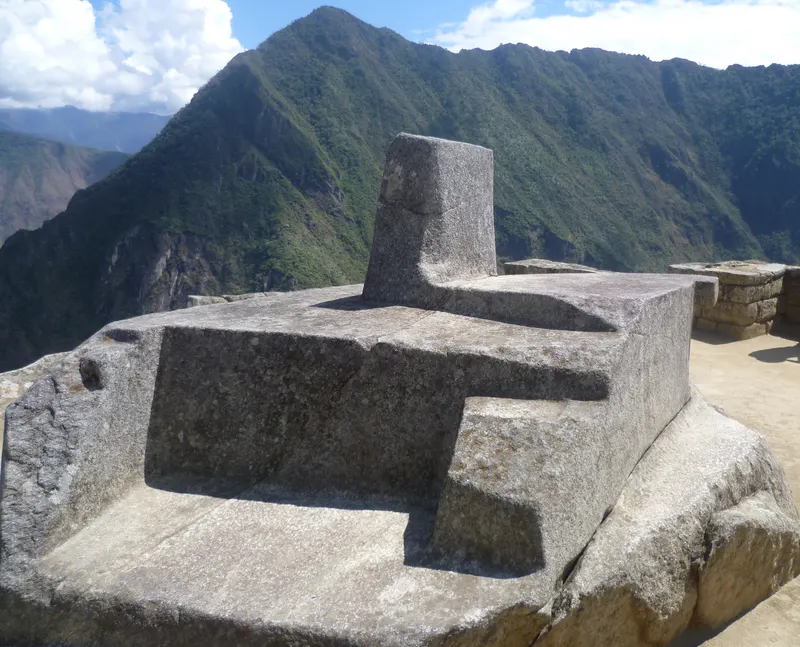
The Intihuatana: Machu Picchu's Hitching Post of the Sun
The carved granite ritual stone at the citadel's high point — what 'hitching post of the sun' means, the astronomy and debate around it, the no-touch rule, and which routes reach it.
Read guide
Do You Need a Guide at Machu Picchu?
When a licensed guide is required or simply worth it, private versus shared, how the route flow works, and how to book ethically.
Read guideMore in Highlights
6
A Rainy Day at Machu Picchu
Rain at the citadel is normal, not a disaster — how to dress for cloud forest, which circuits cope best, how to build train buffers, the Aguas Calientes backups, and why mist makes the most haunting photographs of all.
Read guide
Aguas Calientes (Machu Picchu Pueblo): The Complete Guide
Aguas Calientes — officially Machu Picchu Pueblo — the cloud-forest town at the foot of the citadel. Where to sleep, how the trains and buses connect, the food, the hot springs, luggage, and how long to stay for a calmer entry.
Read guide
Around the Site: Machu Picchu Up Close
The hub for the world immediately around the citadel — what to see inside it, the town of Aguas Calientes below, where to stay, the first buses up, the hot springs, the restaurants, and how to visit responsibly.
Read guide
Best Photography Spots at Machu Picchu
Where the great Machu Picchu photographs are actually made — the classic upper-terrace frame, the llamas, the morning cloud, and which circuit reaches each angle. Plus the sunrise myth and what you simply cannot access.
Read guide
Budget hotels for Machu Picchu
Better-value places to sleep along the Machu Picchu route — honest guesthouses and well-run hostels in Cusco, Ollantaytambo and Aguas Calientes — chosen to stretch the trip without wrecking the altitude ladder or the citadel-morning logistics.
Read guide
Luxury hotels for Machu Picchu
The top-end stays that string together a polished Machu Picchu journey — restored monasteries and oxygen-equipped suites in Cusco, hacienda-and-spa retreats in the Sacred Valley, and the one true luxury option at the gate of the citadel itself.
Read guide