
The Manuel Chávez Ballón Museum & Garden
The little-visited site museum below the citadel — what its excavation finds and botanical garden add to the ruins, where it sits beside the river, and whether it fits a tight train day.

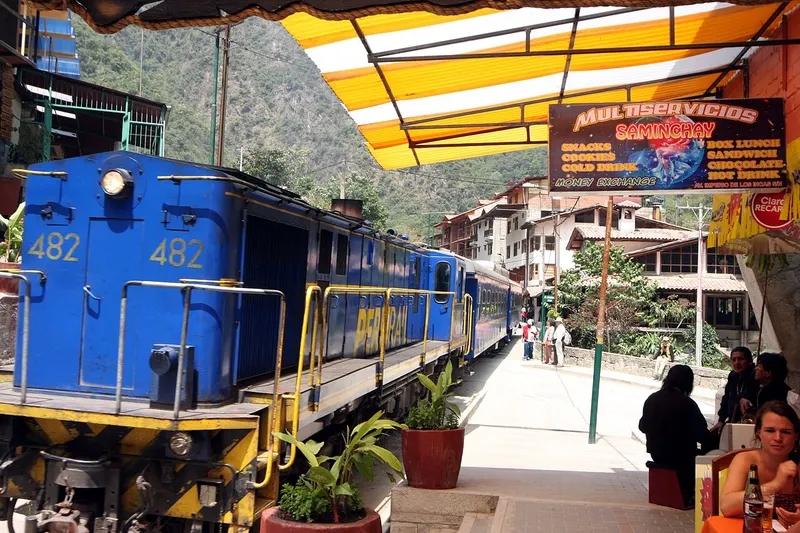
Photo: Alexander Schimmeck / Unsplash
- ✓The Museo de Sitio Manuel Chávez Ballón is the official Machu Picchu site museum, named for the Peruvian archaeologist who led decades of work on the sanctuary.
- ✓It sits down at river level near the foot of the road up to the ruins — not in Aguas Calientes and not at the citadel itself, which is exactly why so few visitors find it.
- ✓Its small, thoughtful collection of excavation finds and a botanical garden of native orchids turn the abstract terraces above into a human story.
- ✓It only really works as a bookend to your visit — reached on foot or by a short walk off the bus road — so plan it around the train, not instead of it.
The museum the crowds walk past
Almost everyone who climbs to Machu Picchu misses the one place built to explain it. The Museo de Sitio Manuel Chávez Ballón is the citadel's official site museum, and it is genuinely lovely — small, quiet, well-made — and yet it stands all but empty while thousands stream past on the buses overhead. The reason is simple geography: it isn't in Aguas Calientes where you sleep, and it isn't up at the ruins where you spend the day. It sits in between, down at the level of the river, near the bridge at the foot of the long switchback road, and that in-between location is enough to make it invisible to a visitor on a tight schedule.
That is a quiet shame, because the museum does something the ruins themselves cannot. Up on the ridge you walk through bare, swept stone — beautiful, but abstract. The Inca took almost everything portable with them, and what was excavated since has had to be gathered, studied and housed somewhere. This is that somewhere. The objects here are the human residue of the estate: the tools, the ceramics, the metalwork and the bones that turn a postcard of grey walls into the record of a living place. For a romantic, it is the difference between admiring a face and reading a diary.
The museum is named for Manuel Chávez Ballón, the Peruvian archaeologist who devoted much of his career to the sanctuary and its surroundings and helped shape how the site is understood and protected. Naming the museum for him is a small act of justice, too — a counterweight to the older story in which a single foreign explorer 'discovered' a place that local people had never lost and Peruvian scholars spent lifetimes studying.
What's inside — finds, context and a garden of orchids
The collection is modest in scale and rich in meaning. Expect excavation finds drawn from work at the sanctuary over the decades: pottery, stone and bronze tools, metal objects, beads and ornaments, and human and animal remains that help reconstruct who lived and worked here. The displays lean toward context rather than spectacle — they explain how the city was built, how its hidden drainage and terraces hold the mountain in place, how the stonework was shaped without iron tools, and how the estate functioned as a royal and ceremonial place rather than a fortress. If you read the panels up at the ruins and wished someone would join the dots, this is where they do.
Just as appealing is the museum's botanical garden, the Jardín Botánico, which gathers native plants of the cloud-forest sanctuary — orchids above all. The mountains around Machu Picchu are one of the great orchid habitats on earth, home to hundreds of species, many tiny and easily missed on the trail, and the garden is the rare chance to see and name them at eye level. In the wet, green months it is a genuine highlight in its own right: a shaded, riverside wander among the flowers that the rush of the main visit never leaves time for.
Treat the museum as a guide-free, self-paced complement to the citadel. There is no circuit to follow and no clock ticking on your slot, so it is also a gentle, low-altitude activity — you are down at the river here, the lowest point of the whole trip — and a calm place to sit out a shower or a wait for a later train. Confirm current opening days, hours and any entry fee locally before you go, as these are managed separately from the citadel ticket and do change.
- Excavation finds: ceramics, stone and bronze tools, metalwork, ornaments and remains from the sanctuary.
- Interpretive displays on Inca engineering — drainage, terracing, mortarless stonework — and the estate's purpose.
- A botanical garden of native cloud-forest plants, with the region's famous orchids the star.
- Self-guided and unhurried — no circuit, no timed slot, and the lowest, gentlest altitude of the trip.
- Hours and any fee are separate from the citadel ticket — verify them locally before relying on a visit.

Where it is, and how to actually get there
The museum sits beside the road and the river below the citadel, near the Puente Ruinas bridge where the bus road up to the ruins begins. That puts it roughly between Aguas Calientes and the gate — closer to the bridge than to the town, and well below the ruins themselves. It is the kind of place you reach on foot rather than by any dedicated transport, which is the other half of why it gets overlooked.
If you are walking up to the citadel rather than taking the shuttle bus, the museum is almost on your route — the footpath up follows the same valley, and a short detour at the bottom reaches it. If you are riding the bus, you can ask to understand where the stop and the walk down sit, but in practice most bus-and-train visitors who want the museum walk the road or the path between the bridge and town to find it. From Aguas Calientes it is a walk of a couple of kilometres along the river road, pleasant in good weather and an easy way to fill a gap before a train.
Be honest with your schedule before you commit. On a single-day, train-in-train-out visit, the citadel will and should come first, and the museum only fits if you have a comfortable buffer before your return train — typically by tacking it on at the end, on the walk back down toward the river, rather than squeezing it into the morning. If you are staying a night in Aguas Calientes, it slots in far more easily: a relaxed second-morning wander or a wet-afternoon fallback when the ridge is socked in cloud.
- Location: riverside near the Puente Ruinas bridge, at the foot of the switchback bus road below the ruins.
- Not in Aguas Calientes and not at the citadel — it's the stop in between, reached mainly on foot.
- On the walking route up to the citadel; a short detour off the bus road for everyone else.
- Roughly a couple of kilometres' river-road walk from Aguas Calientes town.
- Best fitted at the end of a day visit, or as a relaxed extra if you overnight in Aguas Calientes.

Should you go? Who the museum is for
Not every visitor needs the museum, and there is no shame in skipping it — the citadel is the reason you came, and a tight itinerary is better spent up on the ridge in good light than racing to a museum you'll see for twenty minutes. But for the right traveller it is one of the most rewarding hours of the whole trip, precisely because so few people bother.
Go if you are the sort who reads every panel and wants the why behind the walls; if you are staying overnight and have time to spare; if you love plants and want to meet the orchids; if you have children who'll get more from objects they can look at closely than from another stretch of terrace; or if rain has flattened the ridge and you want a sheltered, worthwhile alternative. Skip it, or save it for next time, if you are doing a single hurried day and the choice is between the museum and lingering at the citadel — in that case the ridge wins every time.
At a glance — the site museum
The essentials in one place. Days, hours and any fee are managed separately from the citadel ticket and change, so confirm them locally before you build the visit in.
- What: Museo de Sitio Manuel Chávez Ballón, the official Machu Picchu site museum and botanical garden.
- Where: riverside near the Puente Ruinas bridge, between Aguas Calientes and the citadel road.
- Collection: excavation finds and interpretation, plus a native cloud-forest garden famed for orchids.
- Getting there: on foot — on the walking route up, or a couple of kilometres' walk from town.
- Time needed: roughly an hour; an easy, low-altitude, self-guided stop.
- Best for: overnight visitors, plant lovers, families, panel-readers, and rainy-day backup.
- Verify: opening days, hours and any entry fee — separate from your citadel ticket.

Related guides
Aguas Calientes (Machu Picchu Pueblo): The Complete Guide
Aguas Calientes — officially Machu Picchu Pueblo — the cloud-forest town at the foot of the citadel. Where to sleep, how the trains and buses connect, the food, the hot springs, luggage, and how long to stay for a calmer entry.
Read guide
Machu Picchu History: The Story in the Stone
Who built Machu Picchu and why, the engineering that holds a city to a ridge, the centuries of quiet, Hiram Bingham's 1911 arrival, and the UNESCO status that shapes how we visit today.
Read guide
A Rainy Day at Machu Picchu
Rain at the citadel is normal, not a disaster — how to dress for cloud forest, which circuits cope best, how to build train buffers, the Aguas Calientes backups, and why mist makes the most haunting photographs of all.
Read guideMore in Highlights
6
Around the Site: Machu Picchu Up Close
The hub for the world immediately around the citadel — what to see inside it, the town of Aguas Calientes below, where to stay, the first buses up, the hot springs, the restaurants, and how to visit responsibly.
Read guide
Best Photography Spots at Machu Picchu
Where the great Machu Picchu photographs are actually made — the classic upper-terrace frame, the llamas, the morning cloud, and which circuit reaches each angle. Plus the sunrise myth and what you simply cannot access.
Read guide
Budget hotels for Machu Picchu
Better-value places to sleep along the Machu Picchu route — honest guesthouses and well-run hostels in Cusco, Ollantaytambo and Aguas Calientes — chosen to stretch the trip without wrecking the altitude ladder or the citadel-morning logistics.
Read guide
Luxury hotels for Machu Picchu
The top-end stays that string together a polished Machu Picchu journey — restored monasteries and oxygen-equipped suites in Cusco, hacienda-and-spa retreats in the Sacred Valley, and the one true luxury option at the gate of the citadel itself.
Read guide
Machu Picchu Highlights: What You'll See
The set pieces inside the citadel — the Guardhouse overlook, the Temple of the Sun, the Intihuatana, the Sacred Rock, the Sun Gate and the Inca Bridge — and which circuit and route reaches each one.
Read guide
Machu Picchu Site Guide: Circuit by Circuit
How to read and walk the citadel under the post-2024 system — the three circuits, the landmarks each one reaches, the photo points, the order you move, and how to pace a one-way visit at altitude.
Read guide