
Machu Picchu Site Guide: Circuit by Circuit
How to read and walk the citadel under the post-2024 system — the three circuits, the landmarks each one reaches, the photo points, the order you move, and how to pace a one-way visit at altitude.

Photo: Ed Wingate / Unsplash
- ✓Entry is by a timed ticket tied to one of three circuits and a set of numbered routes — there is no general wander.
- ✓The circuits are largely one-way: the order you walk the citadel is decided before you arrive, so plan your photos and stops accordingly.
- ✓Circuit 1 stays high for the panorama; Circuit 2 is the classic full visit; Circuit 3 runs low and riverside to the temples and the peaks.
- ✓Allow more time and energy than the map suggests — it is steep, stepped and at altitude, even though the citadel is lower than Cusco.
How the visit is structured
Machu Picchu is no longer a place you stroll at will. Since the Ministry of Culture reorganised access in 2024, every visitor enters on a timed ticket tied to a specific circuit and a numbered route — a fixed walking path through the citadel. The circuits are largely one-way, designed to move people through a fragile site without bottlenecks or backtracking, which means the structure of your visit is set the moment you choose your ticket. This guide is about walking the citadel well within that system: what each circuit reaches, where the great moments fall, and how to pace a one-way route so you don't arrive at the best viewpoint already spent.
Three broad circuits organise everything. Circuit 1 keeps to the upper, panoramic side for the classic overlook and the high walks. Circuit 2 — the classic full visit and the natural all-rounder — pairs the postcard view with a descent into the urban sector. Circuit 3 runs lower and riverside, reaching the Temple of the Sun and carrying the add-on peaks. Within each are numbered routes that vary the exact path. The names, numbers and which landmark falls on which route are set officially and updated periodically, so treat anything specific you find on official sources as current and verify before you book.

Circuit 1 — the upper, panoramic side
Circuit 1 keeps you high on the agricultural terraces, the side that holds the image everyone comes for. Its routes climb to the classic overlook near the Guardhouse, where the whole citadel falls away below you with Huayna Picchu rising behind — the single best frame on the site. From the upper terraces the panoramic routes also give access, on certain variants, to the longer high walks: the Sun Gate (Intipunku) out-and-back along the ridge, and the dramatic Inca Bridge clinging to its cliff. What Circuit 1 largely does not do is take you deep among the temples and houses of the urban sector — it is the view circuit, not the stonework circuit.
Choose it if the panorama and the high walks are what you most want, or if mobility is a concern and you'd rather not descend into and back up out of the urban sector. Get to the overlook early in your window for the cleanest light and the smallest crowd, accepting that morning cloud is part of the deal and often lifts as you watch.
- Reaches: the classic Guardhouse overlook and, on some routes, the Sun Gate and Inca Bridge walks.
- Skips: the deep urban sector and the Temple of the Sun.
- Best for: the postcard view, the high walks, and visitors who prefer to stay on the upper terraces.
- Tip: aim for the overlook early in your slot; expect cloud and let it work for you.

Circuit 2 — the classic full visit
Circuit 2 is the one most first-time visitors want, because it does the most. Its routes give you the classic overlook from the upper terraces and then descend into the urban sector, threading past the Sacred Plaza with its Temple of the Three Windows and Principal Temple, the carved Intihuatana ritual stone at the city's high point, and on to the Sacred Rock at the quiet northern end. You get both halves of Machu Picchu — the view and the city — in one continuous one-way walk.
Because it covers the most ground, Circuit 2 also asks the most of your legs and your morning. It is a steady progression of steps, terraces and stone stairways, and the urban sector's stairs add up. Pace it: take the overlook and your photographs first while you and the light are fresh, then move down into the city, lingering at the temples and the Intihuatana rather than rushing for the exit. This is the circuit to choose if you want the fullest single sweep of the site and you have the stamina for it.
- Reaches: the classic overlook plus the urban sector — Sacred Plaza, Intihuatana and Sacred Rock.
- The all-rounder: both the view and the city in one continuous one-way route.
- Most ground covered — pace it, do the overlook first, then descend into the temples.
- Best for: first-timers wanting the fullest single visit with the legs to match.
Circuit 3 — the lower, royal circuit
Circuit 3 runs lower and riverside, into the heart of the urban sector and its finest stonework. This is the circuit that reaches the Temple of the Sun — the curved wall on its natural boulder, the solstice-aligned window, the carved cave beneath — along with the quarry, the close-packed houses and the run of water channels that made the citadel a working city. It is also the circuit that carries the great add-on peaks: Huayna Picchu, the sheer green pinnacle above the city, and Machu Picchu Mountain, the higher, longer climb opposite, each requiring a separate, early-selling permit on a specific ticket.
What Circuit 3 trades away is the high panoramic overlook — it stays lower, so the classic postcard frame is not its strength. Choose it if the masterwork stonework of the Temple of the Sun is your priority, or if you are climbing one of the peaks and need the circuit that connects to it. If a peak permit is your goal, build the entire booking around it, because those add-ons sell out first of everything.
- Reaches: the Temple of the Sun, the urban sector's finest stonework, and the connections to the add-on peaks.
- Carries: the Huayna Picchu and Machu Picchu Mountain permits — separate and earliest to sell out.
- Trades away: the high panoramic overlook — this circuit stays lower.
- Best for: stonework lovers and peak-climbers; book the peak first and build the trip around it.

Pacing, photos and practicalities inside
However you choose, a few things hold across all the circuits. The site is steep and almost entirely stepped, with uneven Inca stone and few railings, so footwear and footing matter more than fitness alone; even strong walkers feel the thin air, despite the citadel sitting lower than Cusco. Allow more time than the route's distance suggests, build in pauses, and don't try to outrun your ticket window — the slots and the one-way flow mean rushing rarely buys you more.
For photographs, the rhythm is the same on every circuit: the light and the crowds both favour the early part of your slot, so prioritise your headline shot — usually the overlook — before you settle into the detail. Morning cloud is constant and often glorious, lifting in sheets off the gorge; budget patience rather than fighting it. And remember the practical rules that protect the site: a credentialed guide is required for many visit types, large bags and certain items are restricted, drones and tripods are generally not allowed, and you carry out what you carry in. These rules change, so verify the current ones — but the spirit is constant: a fragile sanctuary, walked gently and one-way.
- Wear real footwear: steep, stepped, uneven Inca stone with few railings throughout.
- Allow extra time and pauses — the altitude bites even though the citadel is lower than Cusco.
- Shoot your headline view early in your slot; let the rolling morning cloud work for you.
- Guides are required for many visits; large bags, drones and tripods are restricted — verify current rules.
- Stay on the route, don't touch the stonework, and carry out everything you carry in.
 Entry rules & restrictionsWhat you can carry, the guide requirement, and the conduct rules at the gate and inside.
 Altitude & acclimatizingWhy the stairs bite, and how to arrive at the citadel already adjusted.
 Machu Picchu historyThe story behind the stones — the engineering, the rediscovery and the meaning of the place.
At a glance: choosing and walking your circuit
A quick reference to take into the booking. The circuits, routes and rules are set by the Ministry of Culture and revised periodically, so confirm the current detail on official sources before you commit.
- Circuit 1: upper / panoramic — the classic overlook and the high walks; least stonework.
- Circuit 2: classic full visit — overlook plus urban sector; the all-rounder, most ground covered.
- Circuit 3: lower / royal — Temple of the Sun and the add-on peaks; no high overlook.
- Add-on peaks (Huayna Picchu, Machu Picchu Mountain): separate permits on specific tickets — book earliest.
- Order of decisions: pick the circuit for what you most want, then the ticket, then the train and base.
- On the day: real footwear, early headline photo, patience with cloud, and a gentle one-way pace.


Related guides

Machu Picchu Highlights: What You'll See
The set pieces inside the citadel — the Guardhouse overlook, the Temple of the Sun, the Intihuatana, the Sacred Rock, the Sun Gate and the Inca Bridge — and which circuit and route reaches each one.
Read guideMachu Picchu History: The Story in the Stone
Who built Machu Picchu and why, the engineering that holds a city to a ridge, the centuries of quiet, Hiram Bingham's 1911 arrival, and the UNESCO status that shapes how we visit today.
Read guide
Machu Picchu Circuits Explained
Compare the three official circuits and ten routes — panoramic, classic and royal — so you book the right experience: the postcard view, the temples, or the add-on peaks.
Read guideMore in Highlights
6
A Rainy Day at Machu Picchu
Rain at the citadel is normal, not a disaster — how to dress for cloud forest, which circuits cope best, how to build train buffers, the Aguas Calientes backups, and why mist makes the most haunting photographs of all.
Read guide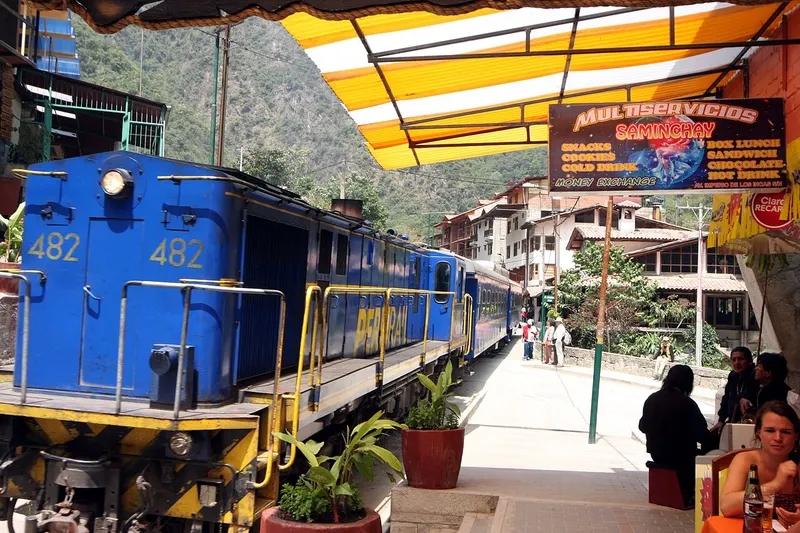
Aguas Calientes (Machu Picchu Pueblo): The Complete Guide
Aguas Calientes — officially Machu Picchu Pueblo — the cloud-forest town at the foot of the citadel. Where to sleep, how the trains and buses connect, the food, the hot springs, luggage, and how long to stay for a calmer entry.
Read guide
Around the Site: Machu Picchu Up Close
The hub for the world immediately around the citadel — what to see inside it, the town of Aguas Calientes below, where to stay, the first buses up, the hot springs, the restaurants, and how to visit responsibly.
Read guide
Best Photography Spots at Machu Picchu
Where the great Machu Picchu photographs are actually made — the classic upper-terrace frame, the llamas, the morning cloud, and which circuit reaches each angle. Plus the sunrise myth and what you simply cannot access.
Read guide
Budget hotels for Machu Picchu
Better-value places to sleep along the Machu Picchu route — honest guesthouses and well-run hostels in Cusco, Ollantaytambo and Aguas Calientes — chosen to stretch the trip without wrecking the altitude ladder or the citadel-morning logistics.
Read guide
Luxury hotels for Machu Picchu
The top-end stays that string together a polished Machu Picchu journey — restored monasteries and oxygen-equipped suites in Cusco, hacienda-and-spa retreats in the Sacred Valley, and the one true luxury option at the gate of the citadel itself.
Read guide