
Ticket or Train First? The Right Order to Book Machu Picchu
The order to book a Machu Picchu trip — entry ticket, train, hotel, trek and bus — and how that order shifts by season, route and how far ahead you are planning.

Photo: Willian Justen de Vasconcellos / Unsplash
- ✓Book the entry ticket first: it is the fixed slot the train, the bus and your night in Aguas Calientes are all arranged around.
- ✓The one exception is the classic Inca Trail — that permit sells out months ahead, so it is booked before anything else.
- ✓Trains are sold by both PeruRail and IncaRail and have far more capacity than the gate, so they slot in around your entry time.
- ✓In dry-season months (roughly May–September) the squeeze is on tickets and trail permits, not on seats — plan earlier accordingly.
The short answer, and the one exception
There is a romance to Machu Picchu that survives every layer of logistics: the city in the clouds, the terraces falling away into the gorge, the first light catching the Intihuatana. But getting there is a sequence, and the sequence has a correct order. Get it right and the whole trip clicks into place. Get it wrong and you can end up with a beautiful train ticket for a day you have no way into the citadel.
The rule is simple. Book the entry ticket first. Everything physical about the day — which train you ride into the gorge, which bus you catch up the switchbacks, which night you sleep in Aguas Calientes — is arranged around the timed slot printed on that ticket. The gate is the bottleneck, capped daily by Peru's Ministry of Culture, so it is the scarcest thing in the chain and the thing to lock down first.
There is exactly one exception, and it is a big one. If you intend to walk in on the classic four-day Inca Trail, that permit is booked before everything — months ahead, often the better part of a year for dry-season departures. The Inca Trail permit bundles your citadel entry into the trek package, so in that case the trek is your ticket, and it leads the entire booking order.

At a glance: the booking order
Most independent trips, the ones built around the train rather than a multi-day trek, follow the same five steps in the same order. The logic is always scarcity first: lock the hardest-to-get thing, then fit the flexible things around it.
- 1. Entry ticket — the timed slot and circuit. The gate is capped; this is the scarcest link.
- 2. Train — PeruRail or IncaRail, chosen to land you in Aguas Calientes before your entry window.
- 3. Accommodation — a night in Aguas Calientes for an early start, or in the Sacred Valley to catch a morning train.
- 4. Add-on peak — Huayna Picchu or Machu Picchu Mountain, if you want one; these are tied to specific circuits and sell out early too.
- 5. Shuttle bus — the ride up the switchbacks from Aguas Calientes; bookable last, but do not skip planning it.
Why the ticket leads — not the train
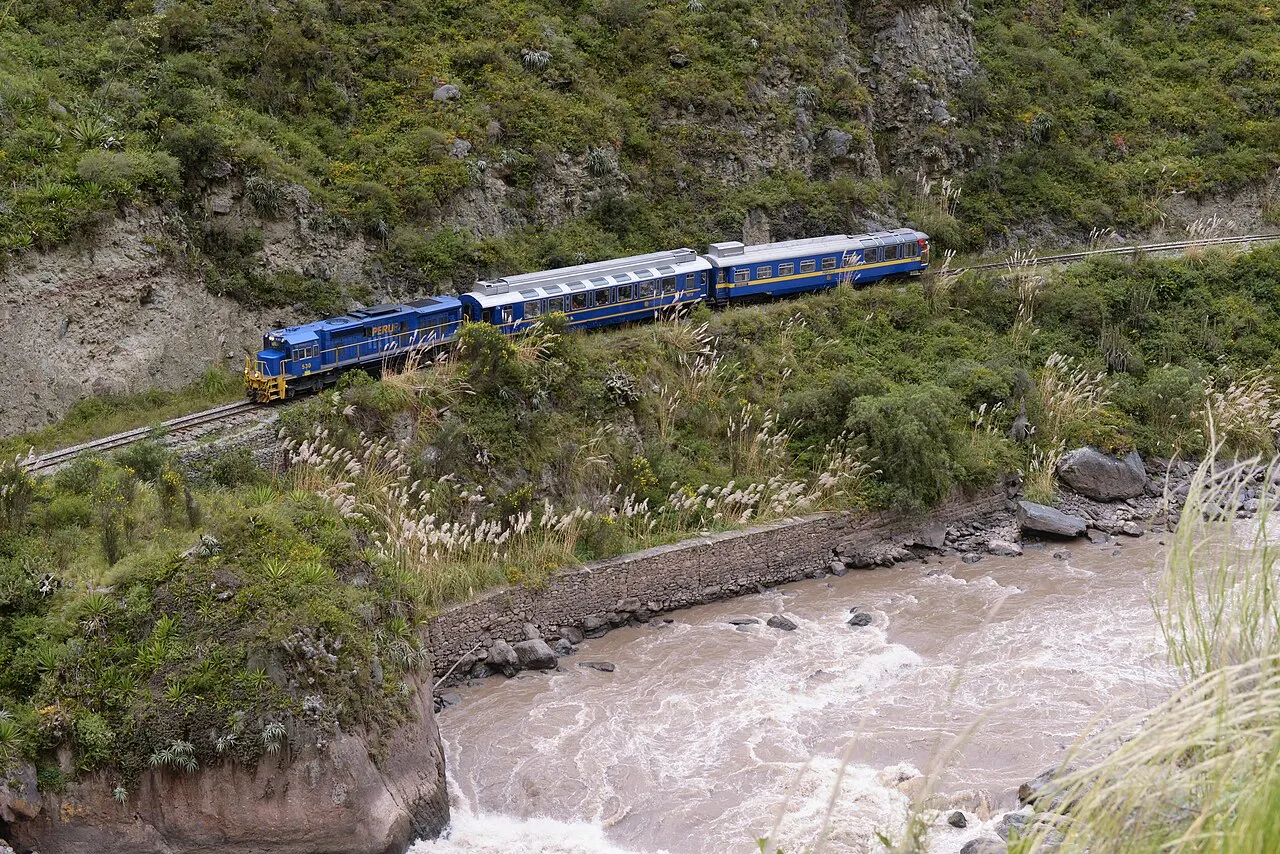
It is tempting to book the train first. It is the part of the journey people picture, the panoramic carriage hugging the Río Urubamba, and the booking sites are slick and quick. But the train is the wrong anchor. Both PeruRail and IncaRail run many services a day, each carrying far more passengers than the gate admits in a single time band. Seats, in other words, are comparatively plentiful. The gate is not.
If you book a train before you have an entry ticket, you are committing to a date and a time before you know whether the citadel can actually take you that morning. In a busy month that is a real risk: you could find your preferred dry-season slots gone and your shiny train ticket pointing at a day you cannot enter. Reverse the order and the problem disappears. Once the entry time is fixed, choosing a train is a calm, ten-minute job of matching a service to your window.
How the order shifts by route
The five-step order above is the train-traveller's version. Two route choices rearrange it.
If you are walking the classic Inca Trail, the order flips at the top. The licensed trek operators hold a fixed daily quota of permits, and those permits include your Machu Picchu entry on the final day. So the trek is booked first, far in advance, and the train only matters for the return leg out of Aguas Calientes. There is no separate citadel ticket to chase — it comes inside the package.
If you are taking a permit-free trek such as the Salkantay or the Lares, you sit somewhere between the two worlds. These routes need no government permit and can be arranged closer to your dates, but most reputable operators still bundle the citadel entry and the return train into the trip. Confirm exactly what is included before you separately buy anything, so you do not end up double-booking an entry you already hold.

How the order shifts by season
Season does not change the order so much as the urgency at each step. The Andes run on two seasons, a dry one from roughly May to September and a wet one from October to April, and the dry months are when demand peaks.
In dry-season months, and especially in the June–July high season around Cusco's Inti Raymi festival, the entry gate and the add-on peaks are the true scarce resources. Tickets for popular morning slots can vanish weeks ahead. The classic Inca Trail's limited permits go even sooner, often gone many months out. So in these months you push step one earlier and earlier, while the train — still plentiful — stays an afterthought.
In the wetter shoulder and low-season months, the pressure eases. Same-week tickets are more often available, the add-on peaks open up, and you have the luxury of booking the whole chain closer together. The order stays identical; you simply have more slack in it. The one wet-season caveat sits outside the citadel entirely: the classic Inca Trail closes every February for maintenance and the heart of the rains, so if February is your window, the trail decision is made for you.
Accommodation, the peaks, and the bus
Once the ticket and train are settled, the rest falls into place quickly. Where you sleep the night before is the next decision, and it turns on how early your entry slot is. A very early slot almost demands a night in Aguas Calientes at the foot of the mountain, so you can ride the first buses up in the dark. A mid-morning slot can often be reached on an early train from the Sacred Valley, letting you sleep lower and warmer in Ollantaytambo.
If you want to climb an add-on peak, decide before you finalise the circuit. Huayna Picchu, the iconic sugarloaf behind the citadel, and Machu Picchu Mountain, the higher ridge opposite, are sold as separate permits tied to specific circuits and entry windows, and they sell out among the earliest things of all. Folding the peak into your plan after the fact can force you to rebook the base ticket — another reason to map your ambitions before you click 'buy'.
The shuttle bus up the switchbacks is the one thing you can leave until last. It is a high-frequency service rather than a fixed seat, so it flexes around you. Just do not forget it exists: building a beautifully timed plan and then arriving with no bus strategy is a classic late stumble. Carry the passport you booked everything under — it is checked against your ticket at the gate.


Verify before you pay
Prices, daily capacities, exact release dates and the fine print of which circuit carries which peak all move over time, set by the Ministry of Culture and the rail operators rather than by us. Treat the order in this guide as evergreen and the numbers as things to confirm on the official channels at the moment you book. The order rarely changes; the details often do.
- Confirm current entry prices and circuit rules on Peru's official ticket platform before buying.
- Cross-check train times and luggage limits directly with PeruRail or IncaRail.
- Re-check Inca Trail permit availability and the February closure with a licensed operator.


Related guides

Machu Picchu Tickets Guide
How the official timed-entry ticket works, where to buy it, what sells out first, and how to match the right ticket to the route and view you came for.
Read guide
Trains to Machu Picchu
PeruRail vs IncaRail, Cusco vs Ollantaytambo departures, the service classes, stations, the strict luggage allowance, bimodal road-and-rail options, and where the train fits in the booking order.
Read guide
Best Time to Visit Machu Picchu
Two Andean seasons, not four — a full month-by-month guide to weather, crowds, ticket urgency, trains, treks and altitude, so you can pick the dates that fit the trip you actually want.
Read guideMore in Tickets guide
6
Best Circuit for the Classic Machu Picchu Photo
Which routes deliver the iconic postcard view, when the light is best, how mist and season play, and how to avoid the photo disappointment that catches first-timers.
Read guide
Do You Need a Guide at Machu Picchu?
When a licensed guide is required or simply worth it, private versus shared, how the route flow works, and how to book ethically.
Read guideHow to Book Machu Picchu Tickets
The booking sequence, in order: pick the date, choose the circuit and route, secure the entry window, enter passport details, then arrange the train and your overnight.
Read guide
Intipunku, the Sun Gate: How to Reach It
The Sun Gate above the citadel — the Inca Trail's grand entrance and a stiff out-and-back for ticket holders. How to reach it, the seasonality, the views and the effort involved.
Read guide
Last-Minute Tickets in Aguas Calientes
Buying Machu Picchu entry in person at the foot of the mountain — the official sales offices in Machu Picchu Pueblo and Cusco, the real risks and caveats, and why this is a backup, not Plan A.
Read guide
Machu Picchu Circuit Map Guide: Reading the Routes
How to read the official Machu Picchu route map — the three circuits and their numbered routes — and match your timed ticket to the views and monuments you actually came for.
Read guide