
Cusco airport to city & valley
Getting from Cusco's Velasco Astete airport to your hotel or the Sacred Valley — taxi, pre-booked transfer or hotel pickup — plus the altitude-first question of where to head after you land.

Photo: Theo Topolevsky / Unsplash
- ✓Cusco's airport sits inside the city, so the ride to most hotels is short — usually well under half an hour.
- ✓Your options on landing are a pre-booked transfer or hotel pickup, or an official taxi from the arrivals rank.
- ✓The bigger decision is not how you transfer but where to: stay in Cusco at 3,399 m, or descend to the lower Sacred Valley to sleep softer.
- ✓Whatever you choose, plan a gentle first day — most altitude sickness shows up in these first hours.
A short ride and a big decision
Cusco's Alejandro Velasco Astete International Airport is unusual: it sits right inside the city, ringed by the same brown hills the Inca terraced. That means the transfer itself is mercifully short — for most central and San Blas hotels you are at the door within twenty minutes or so. The logistics of getting off the plane and to a bed are simple. The interesting question is a different one, and it is about altitude, not distance: where should that bed be?
Because you have just climbed from sea level (if you flew in from Lima) to 3,399 m in a single hop, your first hours in Cusco are when soroche — altitude sickness — is most likely to announce itself. The transfer decision and the where-to-stay decision are really the same decision, and getting it right sets the tone for the whole trip. This page answers both, in the practical question-and-answer form people actually arrive with.
At a glance
The transfer in brief. Distances are fixed; fares vary, so settle a price before you ride and confirm any pre-booked transfer the day before.
- Airport: Alejandro Velasco Astete (CUZ), inside Cusco city.
- Cusco altitude: 3,399 m — higher than Machu Picchu itself.
- To central Cusco: a short ride, often under 20–30 minutes depending on traffic.
- To the Sacred Valley (Ollantaytambo / Urubamba): roughly 1.5–2 hours by road.
- Options: pre-booked transfer or hotel pickup, or an official airport taxi.
- First-day rule: go slow, hydrate, ease off alcohol — let the body catch up.
How do I get from the airport to my hotel?
You have two straightforward routes. The calmest is to arrange a transfer or hotel pickup in advance: many Cusco hotels offer an airport collection, sometimes free, often for a modest set fee, and a driver meeting you with your name on a card removes all friction on a day when your head may already be foggy from the altitude. Confirm it the day before so there is no doubt someone is coming.
The other route is a taxi from the arrivals area. Use the official airport taxi rank rather than an unmarked car that approaches you, agree the fare before you get in (city taxis are not metered for this), and have small notes ready. The ride into the centre is short and the fares are modest by international standards. Either way, the practical move is the same: get to your room, drop the bags, and resist the urge to charge straight out into the thin air.
Should I stay in Cusco or go straight to the Sacred Valley?
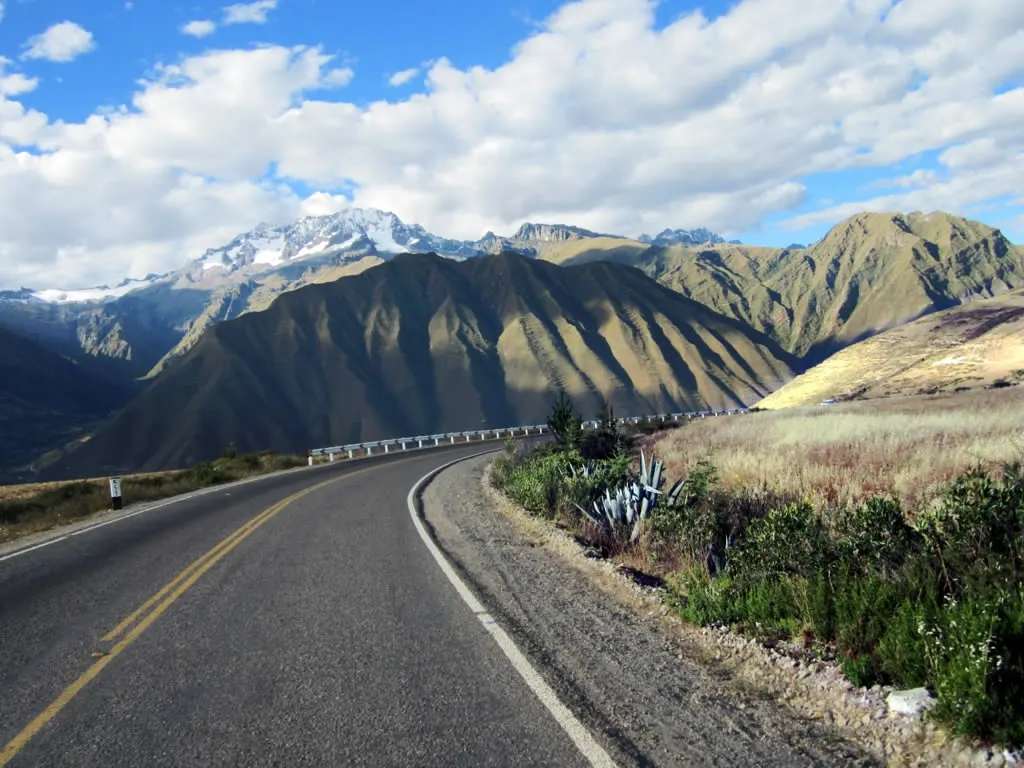
This is the question worth thinking about before you fly. Cusco at 3,399 m is actually the highest you will sleep on a standard Machu Picchu trip — higher than the citadel, higher than most of the Sacred Valley. For some travellers, especially anyone who has struggled with altitude before, the kindest move is to skip Cusco for the first night or two and descend straight from the airport to the lower valley, around 2,800 m, where the air is thicker and sleep comes easier.
The valley transfer is longer — roughly an hour and a half to two hours by road to Ollantaytambo or Urubamba — but a pre-booked driver can take you door to door, and you wake lower and better rested. You can then visit Cusco's altitude on day trips once you have your legs. Others prefer to base in Cusco from the start for its restaurants, ruins and atmosphere, and simply pace the first day gently. Neither is wrong; the choice turns on how you tend to react to height.

What should I do in the first hours after landing?
Almost nothing strenuous, on purpose. The body adjusts to altitude over hours and days, not minutes, so the first afternoon is for moving slowly: check in, lie down for a while if you need to, drink far more water than you think you should, and skip the celebratory pisco sour until tomorrow. Cusco's hotels and cafés serve mate de coca — coca-leaf tea — which many travellers swear by for taking the edge off.
Keep any first-day plans low and flat. A slow wander around the Plaza de Armas, a sit in a café, an early dinner — that is plenty. Save the climbs, the long museum days and the trek itself for once you have a night or two behind you. Mild headache and breathlessness are common and usually pass; if symptoms become severe or do not ease, treat it seriously and seek medical advice rather than pushing on.
- Drink water steadily; carry a bottle from the start.
- Skip alcohol the first evening; let your body settle first.
- Try mate de coca, the local altitude standby.
- Keep the first day flat and slow — no climbs, no trek, no rush.
- If symptoms turn severe or persist, seek medical help.
Where do I head next, toward Machu Picchu?
Once you have your altitude legs, the route to the citadel is a staged one. From Cusco or the valley you make your way to the rail gateway — usually Ollantaytambo — and ride the train down through the Urubamba gorge to Aguas Calientes, the town at the foot of the mountain. From there a shuttle bus or a steep walk carries you up to the gate for your timed entry. The airport transfer is simply the first link in that chain.
Plan the chain backwards from the fixed point: your capped, timed citadel entry. Book that first, then your train and acclimatization nights, then the small stuff like this transfer. If you arrive in Cusco late and tired, descending straight to the valley to sleep can put you a useful step ahead on both altitude and logistics for the next morning's train.



Related guides

Where to stay in Cusco
A neighbourhood-by-neighbourhood guide to basing in Cusco before Machu Picchu — weighing altitude comfort, charm, walkability, station and airport access, and which area suits families, couples, luxury and budget travellers.
Read guide
Cusco acclimatization & altitude
How to land soft in Cusco at 3,399 m: reading soroche, pacing your first day, what to eat and drink, the easy activities that help, and when to simply rest before Machu Picchu.
Read guide
Lima to Cusco to Machu Picchu
Why getting from Lima to Machu Picchu is a staged journey, not a single hop — the flight to Cusco, the altitude jump, where to stage, and how to pace it so the citadel day actually works.
Read guideMore in Getting There
6
Aguas Calientes bus to the citadel
How the shuttle bus from Aguas Calientes (Machu Picchu Pueblo) up to the citadel gate works — buying tickets, the morning queue, timing it to your entry slot, and the walking alternative.
Read guide
Cusco to Machu Picchu: Every Way to Make the Journey
The realistic ways from the old capital to the citadel — train, bimodal bus-and-train, staging in the Sacred Valley, the long Hidroeléctrica back door, and whether a one-day round trip is sane.
Read guide
Cusco to Ollantaytambo
The ways to cover the road from Cusco to the rail gateway at Ollantaytambo — private driver, shared colectivo, tour transfer and taxi — plus the baggage strategy that saves you on the train.
Read guide
Luggage Rules & Storage for Machu Picchu
Train baggage limits, where to leave the big bag in Cusco or Ollantaytambo, what to carry into the citadel, station storage in Aguas Calientes, and the trek-duffel system.
Read guide
Ollantaytambo to Machu Picchu: The Easiest Way In
Why Ollantaytambo is the most reliable rail gateway to the citadel — the timing, the short gorge ride, where to stay, taxis to the platform, and how to stage it from the Sacred Valley.
Read guide
Rail, Bus & Protest Disruptions at Machu Picchu
How to build buffers and backups around the things that go wrong — rail suspensions, bus disputes, weather and landslides, strikes, and missed connections — so a timed citadel slot survives the unexpected.
Read guide