
Lima to Cusco to Machu Picchu
Why getting from Lima to Machu Picchu is a staged journey, not a single hop — the flight to Cusco, the altitude jump, where to stage, and how to pace it so the citadel day actually works.

- ✓There is no direct route from Lima to Machu Picchu — you fly to Cusco first, then continue overland and by train.
- ✓Lima sits at sea level; Cusco at 3,399 m. The flight gains all that altitude in about 80 minutes, so the body needs days to catch up.
- ✓Do not try to land in Cusco and reach the citadel the same day — it is technically possible and consistently a bad idea.
- ✓The smart shape is fly in, stage low in Cusco or the Sacred Valley, then ride the train to the gorge once acclimatized.
Not one hop, but a journey in stages
People picture Lima to Machu Picchu as a single line on a map — capital to wonder, sea to citadel. The reality is more layered, and more interesting. Lima clings to the Pacific coast; Machu Picchu hides in a cloud-forest gorge on the far side of the Andes. Between them sits Cusco, the old Inca capital and the hinge of every itinerary. You fly to Cusco, you let your body adjust to the altitude, and only then do you make the final overland-and-rail run to the city in the clouds.
Understanding this shape is the whole game. Treat the trip as one quick errand and the Andes will punish you with altitude sickness and a rushed, headachy day at the ruins. Treat it as a staged journey — descend the altitude ladder deliberately, give Cusco a couple of nights, and let the Sacred Valley do its gentle work — and the citadel arrives as a calm, earned crescendo rather than a scramble.

At a glance
The journey in numbers and stages. Times and prices shift with airline schedules and season — treat these as planning guidance and confirm flights and trains directly before you commit.
- Stage 1: Fly Lima → Cusco, roughly an 80-minute flight across the Andes.
- Altitude jump: Lima at sea level to Cusco at 3,399 m — a steep gain in one flight.
- Stage 2: Acclimatize. Give Cusco two nights, or drop to the Sacred Valley (~2,800 m).
- Stage 3: Travel to the rail gateway (usually Ollantaytambo) and ride the train to Aguas Calientes.
- Stage 4: Bus or walk up to the citadel at 2,430 m for your timed entry slot.
- Minimum sensible time: think in terms of several days, not a single overnight.
Stage one — the flight to Cusco
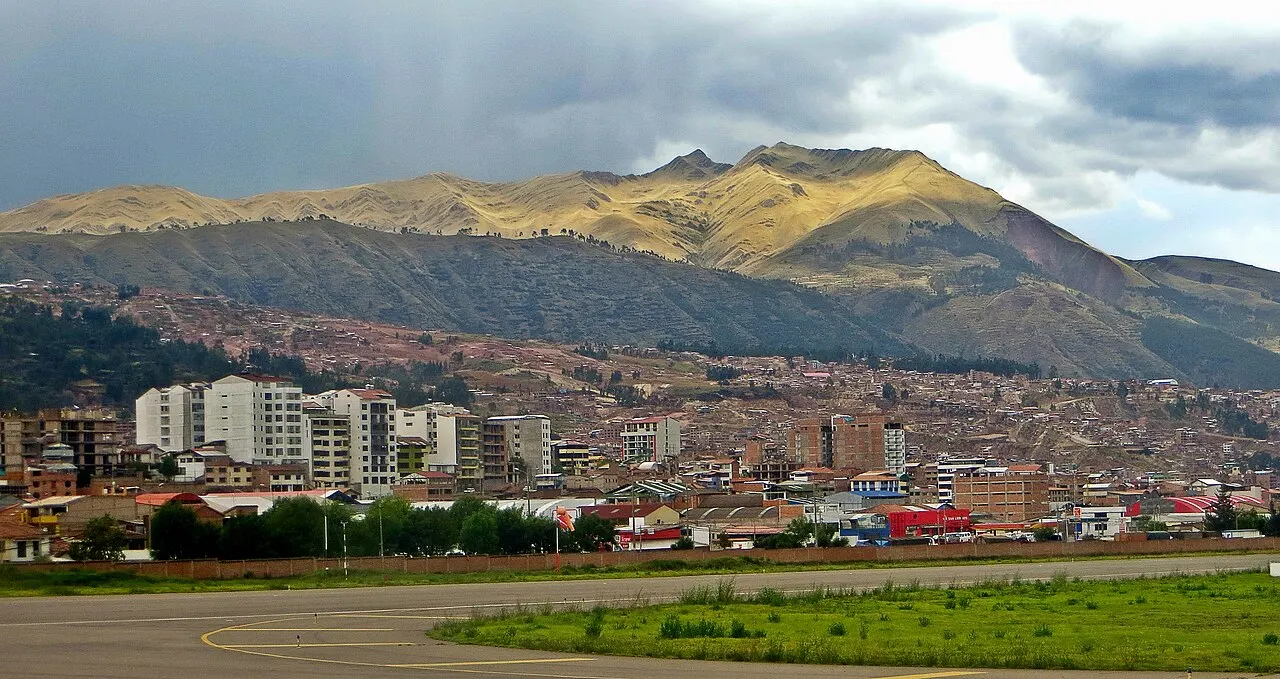
Most journeys begin with a short domestic flight from Lima's Jorge Chávez International Airport to Cusco's Alejandro Velasco Astete Airport. Several Peruvian carriers fly the route many times a day, and it is one of the most scenic short hops anywhere — the cabin tilts over a wall of snow-capped Andean peaks before dropping into Cusco's high mountain bowl. Morning flights are favoured because Cusco's weather and winds can disrupt afternoon arrivals, so an early seat is the safer bet.
There is an overland alternative — long-distance buses climb from the coast over the Andes — but it is a punishing multi-day haul that most Machu Picchu travellers skip. The flight saves days and, counter-intuitively, can be gentler on the body when paired with proper acclimatization on arrival. Book the Lima–Cusco leg with a little slack around any onward train, since a delayed or cancelled flight can otherwise topple a tightly stacked plan.
Stage two — respect the altitude jump
This is the part that catches the unprepared. In roughly eighty minutes you rise from sea level to 3,399 m, a gain the body simply cannot absorb in real time. Soroche — altitude sickness — most often shows up not at the ruins but here, in your first hours in Cusco: headache, breathlessness on the stairs, a thick, tired head. It is common, usually manageable, and almost always eased by going slowly.
So build a buffer into the plan. Give Cusco two unhurried nights before you climb or trek anything, drink far more water than feels necessary, go easy on alcohol the first evening, and keep the first day low-effort — the Coricancha, the San Pedro market, a slow plaza wander. Many travellers do even better by descending straight from the airport to the lower Sacred Valley to sleep at around 2,800 m, then visiting Cusco's altitude on day trips. The citadel itself, at 2,430 m, is lower than both — by the time you reach it, you are coming down.
- Plan at least two nights at altitude before the citadel or any trek.
- Hydrate hard; ease off alcohol on arrival; keep the first day gentle.
- Consider sleeping lower in the Sacred Valley and treating Cusco as a day trip.
- Coca tea is the local standby; see a doctor if symptoms are severe or persist.

Stage three — where to stage before the gorge
Once your body has settled, the question becomes where to base yourself for the run to the citadel. Two staging strategies dominate. The first keeps Cusco as the hub: see the city, take valley day trips, then make your Machu Picchu day from a fairly early start. The second, often kinder, drops you down into the Sacred Valley — Ollantaytambo especially — to sleep lower and shorten the morning train hop.
Ollantaytambo earns its popularity because it is both a living Inca town and the platform where most trains to Aguas Calientes begin. Sleeping there the night before your citadel entry turns the morning into a short, calm ride rather than a pre-dawn dash from Cusco, and the lower altitude makes for an easier night. From the valley you take the train down through the Urubamba gorge to Aguas Calientes, the town at the foot of the mountain.


Stage four — the final climb to the citadel
The train ends at Aguas Calientes (Machu Picchu Pueblo), the cloud-forest town that exists almost entirely to serve the ruins above it. From here the last stretch is a shuttle bus up a series of switchbacks to the gate, or — for the energetic — a steep stairway climb on foot. Either way you arrive at the citadel at 2,430 m for the timed entry slot printed on your ticket, the lowest point of your whole high-altitude arc.
Because the citadel runs on capped, timed entry tied to a specific circuit, the slot is the fixed anchor the entire Lima-to-Machu-Picchu chain hangs from. Book that entry first, then arrange flights, acclimatization nights, trains and the bus around it. Carry the passport you booked with — it is checked at the gate. The reward for all the staging is the oldest cliché in travel made suddenly true: the mist lifts, the terraces fall away, and the city in the clouds is simply there.

Putting the days together
Stack the stages and a sensible minimum emerges: fly to Cusco, acclimatize for a couple of nights, stage in the valley, ride in, climb the citadel, ride out. Compress that below three or four days and you are gambling with altitude and weather both. Give it five and the trip breathes — room to enjoy Cusco and the valley as destinations in their own right rather than waypoints.
A worked, well-paced version of exactly this arc lives in our five-day itinerary, with the altitude ladder built in so you sleep in the right order. Use it as a skeleton and hang your own flights and tastes on it. The constant, whichever shape you choose: book the citadel entry first, then let everything else — the Lima flight included — arrange itself around that one fixed point.


Related guides

Cusco airport to city & valley
Getting from Cusco's Velasco Astete airport to your hotel or the Sacred Valley — taxi, pre-booked transfer or hotel pickup — plus the altitude-first question of where to head after you land.
Read guide
Altitude in Machu Picchu, Cusco & the Valley
How altitude really works across the trip — why Cusco is higher than the citadel, where soroche hits hardest, the low-to-high-to-low ladder, and sensible pacing, with medical-caution language throughout.
Read guide
Five Days: Cusco, the Sacred Valley & Machu Picchu
A balanced five-day Machu Picchu itinerary — proper Cusco acclimatization, an unhurried Sacred Valley, an overnight in Aguas Calientes and the citadel, with altitude and ticket buffers built in so a cloudy morning or a late train never sinks the trip.
Read guideMore in Getting There
6
Aguas Calientes bus to the citadel
How the shuttle bus from Aguas Calientes (Machu Picchu Pueblo) up to the citadel gate works — buying tickets, the morning queue, timing it to your entry slot, and the walking alternative.
Read guide
Cusco to Machu Picchu: Every Way to Make the Journey
The realistic ways from the old capital to the citadel — train, bimodal bus-and-train, staging in the Sacred Valley, the long Hidroeléctrica back door, and whether a one-day round trip is sane.
Read guide
Cusco to Ollantaytambo
The ways to cover the road from Cusco to the rail gateway at Ollantaytambo — private driver, shared colectivo, tour transfer and taxi — plus the baggage strategy that saves you on the train.
Read guide
Luggage Rules & Storage for Machu Picchu
Train baggage limits, where to leave the big bag in Cusco or Ollantaytambo, what to carry into the citadel, station storage in Aguas Calientes, and the trek-duffel system.
Read guide
Ollantaytambo to Machu Picchu: The Easiest Way In
Why Ollantaytambo is the most reliable rail gateway to the citadel — the timing, the short gorge ride, where to stay, taxis to the platform, and how to stage it from the Sacred Valley.
Read guide
Rail, Bus & Protest Disruptions at Machu Picchu
How to build buffers and backups around the things that go wrong — rail suspensions, bus disputes, weather and landslides, strikes, and missed connections — so a timed citadel slot survives the unexpected.
Read guide