
Your First Day in Cusco: A Gentle Itinerary
An altitude-friendly plan for arrival day in Cusco — slow, flat and central, but still a real Cusco day. How to pace the hours from a late breakfast to a balcony dusk while your body adjusts to 3,399 m.

Photo: Nina Pascal / Unsplash
- ✓Cusco sits at 3,399 m — higher than Machu Picchu itself — so the first day is for adjusting, not achieving.
- ✓The plan stays flat, central and slow: a late breakfast, a gentle orientation walk, a long rest, an easy evening.
- ✓It deliberately leaves out anything strenuous — no hilltop ruins, no steep San Blas climb — saving the effort for day two.
- ✓Hydrate hard, eat light at first, go easy on alcohol, let coca tea help, and listen to your body before any plan.
The one rule for arrival day
Most travellers reach Cusco by a short flight from Lima, climbing from sea level to 3,399 m in barely over an hour. The body has no time to adjust on the way, so it does its adjusting here — and the first twenty-four hours are when soroche (altitude sickness) is most likely. The single rule that governs this whole itinerary is therefore very simple: do less than you think you can. Fitness doesn't protect you; pacing does.
That doesn't mean wasting the day in your hotel room. A first day in Cusco can be slow and still feel like a proper introduction to one of the most beautiful cities in the Americas — you just keep it flat, central, well-hydrated and unhurried. What follows is a gentle hour-by-hour shape you can lean on, with the heavy sights (the hilltop ruins, the steep climb to San Blas's viewpoints) deliberately held back for once you've slept on the altitude.
It helps to know why this matters so much for the trip as a whole. Machu Picchu, counter-intuitively, sits lower than Cusco — around 2,430 m against the city's 3,399 m — so the altitude you feel here is the hardest you'll face. Get the first day or two right and you spend the rest of the journey coming down, not up. Rush the first day and overdo it, and you risk a miserable, headachy start that can shadow the days that follow. The hours below are designed to bank you a good night's sleep and a smooth second day, which is worth far more than one extra sight ticked off on arrival.
- Do less than you think you can — the altitude, not your fitness, sets the pace.
- Stay flat and central; save anything uphill or strenuous for day two.
- Drink water constantly, eat light early on, go easy on alcohol, accept the coca tea.
- If you feel genuinely unwell — bad headache, vomiting, breathlessness at rest — rest, use oxygen if offered, and see a doctor if it doesn't ease.
Step 1 — Land, settle and rest (arrival to late morning)
Whatever time you land, treat the first couple of hours as decompression. Take a taxi or transfer straight to your hotel — the airport sits close to the city, so it's a short ride — check in or at least drop your bags, and sit down. Many central hotels greet you with a cup of coca tea precisely because this moment matters; take it. Resist the urge to dash out sightseeing on adrenaline. A short rest now, lying down if you can, pays off across the whole day.
If you arrive very early, a brief nap is fine, but don't sleep the whole day away — gentle activity and daylight help you adjust and sleep better tonight. Drink a large glass of water, then another. Keep your movements slow and deliberate; you'll notice that even climbing a flight of stairs leaves you puffing, which is normal and the clearest sign to take it easy.
Use this settling-in hour to take stock of how you actually feel, honestly. A mild headache, a little breathlessness and some tiredness are all normal and usually ease over the day. What you're watching for is anything more — a headache that worsens despite rest and water, nausea, dizziness or real shortness of breath even when sitting still. If that's the picture, this is the moment to slow everything down further, ask your hotel about oxygen, and be ready to see a doctor rather than push on. Most people never reach that point, but knowing the line means you can relax about the ordinary aches.
- Transfer straight to the hotel; the airport is close to the centre.
- Accept the welcome coca tea and sit for a while before going out.
- Hydrate immediately and keep every movement slow.
- A short nap is fine; a whole-day sleep is not — get into daylight gently.

Step 2 — A late, easy breakfast (late morning)
When you're ready to head out, make your first stop food — but light food. At altitude your appetite often shrinks and heavy, rich meals sit badly, so go for something simple: eggs, fruit, bread, soup, plenty of warm drinks. The cafés on and just off the Plaza de Armas are perfect for this, and they double as your first proper sit-down look at the city. If your hotel breakfast was early or skipped, a leisurely late breakfast here resets the day at the right pace.
This is also the moment to do a little quiet logistics. Over your coffee, confirm tomorrow's plans, check that your Machu Picchu and train bookings are in order, and ask your café or hotel where the nearest pharmacy is, just in case. Getting these small things settled now means the rest of the day can be genuinely unstructured.
A word on coca, since it'll be everywhere today. Coca tea (mate de coca) and coca leaves are the traditional Andean remedy for the altitude, offered freely at hotels and cafés, and many travellers find they help with the headache and the lethargy. They're legal and normal throughout Peru. Two caveats worth knowing: coca is mildly stimulating, so go easy on it late in the day if you want to sleep, and be aware it can show up on a drug test, which matters if you have one waiting at home. Beyond that, accept the cup — it's part of arriving here.
Step 3 — A gentle orientation loop (early afternoon)
Now do the one piece of 'sightseeing' that asks almost nothing of you: a slow, flat loop around the historic core to learn the map. Start in the Plaza de Armas and walk the arcades, getting a feel for which streets lead where. Wander up the first stretch of Hatun Rumiyoc just far enough to see the famous twelve-angled stone — a single Inca block cut to interlock with its neighbours on twelve faces, and a perfect, low-effort introduction to the masonry you'll meet at Machu Picchu. Then drift back down and out toward Avenida El Sol.
Keep this loop honest about the altitude. Walk slowly, stop often, photograph everything, and turn back the moment you feel you've had enough — there's no prize for completion. You're not trying to see the city's sights today; you're learning its shape so tomorrow runs smoothly, and you're letting your body keep adjusting while you move gently in the daylight.
If you have energy to spare, you can widen the loop a little to take in the lively streets toward the San Pedro market and Plaza San Francisco — flat, full of everyday Cusco life, and a good place to feel the city away from the tour groups. But treat that as a bonus, not an obligation. The whole point of this stretch is that it bends to how you feel: a short version is a fine first day, and the longer version is there only if your body is happy to take it.
- Loop the Plaza de Armas arcades to learn the lay of the land.
- Walk a short way up Hatun Rumiyoc to the twelve-angled stone, then back.
- Stay on the flat; stop often; turn back when you've had enough.
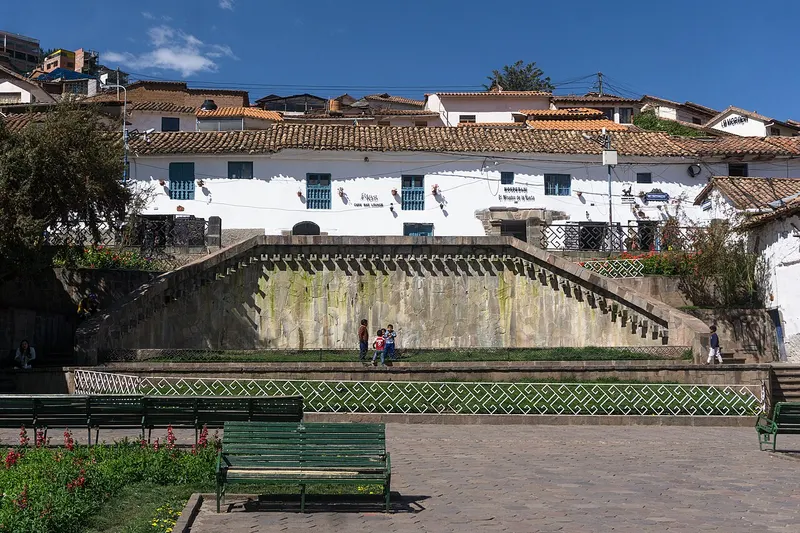
Step 4 — One small, flat sight (mid-afternoon, optional)
If you're feeling steady — no headache, breathing settled, energy holding — you can add one gentle, indoor or flat sight in the afternoon. The best candidates are close and undemanding: the Qorikancha, the Inca sun temple a short, level walk south down El Sol, where you can see the famous fitted stonework that the Spanish built the Santo Domingo convent on top of; or a quick look inside the cathedral on the plaza if it's open and ticketed for entry that day. Either gives you a real taste of Cusco's layered Inca-and-colonial story without any climbing.
The word to hold onto here is 'optional'. If your head is pounding or the altitude has flattened you, skip this step entirely and feel no guilt — a single museum or temple is not worth pushing through soroche for, and you have the rest of the trip. The mark of a good first day is that you finish it feeling better, not worse.
- Qorikancha: the Inca sun temple, a flat walk south down El Sol — no climbing.
- Cusco Cathedral: an indoor option on the plaza, if open and ticketed that day (verify).
- Genuinely optional — skip it if the altitude is biting, and rest instead.

Step 5 — Rest properly (late afternoon)
Build a real rest into the late afternoon — it's not a luxury, it's part of the plan. Head back to your hotel, lie down for an hour, drink more water, and let your body do its quiet work. This mid-trip pause is what lets the day stay pleasant without tipping into exhaustion, and it sets you up to sleep well tonight, which is the most important thing of all for adjusting to the altitude.
Use the time to potter, not push: sort photos, read about tomorrow, send a message home. If anyone in your group is struggling, this is the window to take it really easy, keep fluids up, and decide whether tomorrow's plan needs softening too. Acclimatization isn't one bad afternoon followed by a fix; it's a couple of gentle days in a row.

Step 6 — An easy evening (dusk to dinner)
Round the day off gently. As the light goes, head up to a balcony restaurant on the Plaza de Armas or a terrace café and watch the cathedral floodlights come on over the square — it's one of Cusco's great free pleasures and the perfect low-effort finale. For dinner, keep it light again on this first night: a soup, a simple main, plenty of water. Be cautious with alcohol — that first pisco sour hits much harder at 3,399 m, and a heavy night will wreck tomorrow.
Then turn in early. You'll likely sleep less soundly than usual on a first night at altitude — broken sleep and odd breathing are normal — so give yourself a long runway. Tomorrow, with the altitude loosening its grip, you can take on more: the climb to San Blas's viewpoints, the hilltop ruins above town, or the run down toward the Sacred Valley and the train. Today's job was only to land soft, and a slow, beautiful first day in Cusco is exactly how you do it.
- Watch dusk from a plaza balcony — the easiest, loveliest end to the day.
- Keep dinner light; go very easy on alcohol at altitude.
- Turn in early and expect imperfect sleep on the first night — that's normal.


At a glance
The shape of a gentle first day, in one place. The altitude facts are evergreen; church and site hours and tickets change, so verify anything time-sensitive on the day.
- Goal: adjust to 3,399 m — do less than you think you can.
- Morning: land, rest, hydrate, accept the coca tea; late, light breakfast on the plaza.
- Afternoon: a flat orientation loop, one optional flat sight (Qorikancha or cathedral), then real rest.
- Evening: dusk from a balcony, a light dinner, very little alcohol, an early night.
- Save for day two: San Blas's viewpoints, Sacsayhuamán and the hilltop ruins, the move to the valley.
Related guides

Cusco acclimatization & altitude
How to land soft in Cusco at 3,399 m: reading soroche, pacing your first day, what to eat and drink, the easy activities that help, and when to simply rest before Machu Picchu.
Read guide
Cusco's Plaza de Armas: A Guide
The heart of the old Inca capital and the easiest place to find your feet at altitude — the cathedral, the Compañía de Jesús, the arcades, and how to use the square as the hub of a gentle first day.
Read guide
Best Cafés in Cusco
Where to take coffee, breakfast and a gentle acclimatization morning in Cusco — the plaza spots, the San Blas hideaways and the quieter local lanes, mapped for couples easing into the altitude.
Read guideMore in Cusco Base
6
Best hotels in Cusco
How to choose well among Cusco's hotels for a Machu Picchu trip — judged not on stars alone but on altitude comfort, location and walkability, character, family fit, and how cleanly they set up the onward journey to the citadel.
Read guide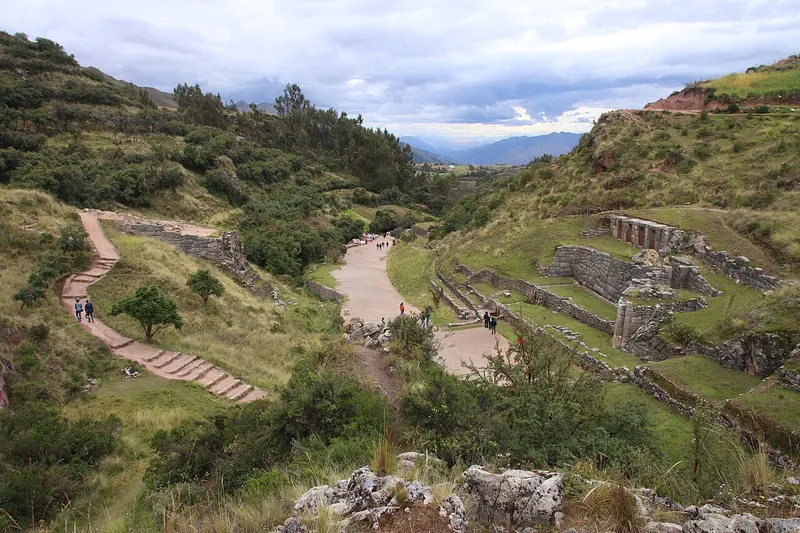
Boleto Turístico del Cusco
How the COSITUC Boleto Turístico works — the combined pass that covers Sacsayhuamán, Pisac, Ollantaytambo, Moray, the Maras–style sites and a clutch of Cusco museums — and when it's actually worth buying.
Read guide
Budget hotels in Cusco
How to sleep well in Cusco for less before Machu Picchu — value hotels, guesthouses and hostels, where the cheaper rooms cluster, and the few things never to scrimp on at 3,399 m.
Read guide
Cusco & Machu Picchu Costs
A realistic way to think about the money — the fixed citadel ticket, the train that dominates the budget, buses, guides, food and the trek add-ons — and where the costs hide.
Read guide
Cusco Cathedral: The Plaza de Armas Centrepiece
The great colonial cathedral on Cusco's Plaza de Armas — built on Inca foundations, hung with Cusco School paintings, and home to the famous guinea-pig Last Supper. Tickets, art, dress code and how it fits a first acclimatizing day.
Read guide
Cusco City Tour: Guided vs DIY, and What to See
The classic Cusco half-day circuit — Qorikancha, the Cathedral, and the four Inca ruins above town: Sacsayhuamán, Q'enqo, Puka Pukara and Tambomachay. How to choose between a guided tour and doing it yourself, with altitude-friendly pacing.
Read guide