
Pisac: Market Town, High Ruins & Valley Views
The Sacred Valley's eastern gateway — the famous artisan market, the spectacular cliffside ruins, the cafés and bohemian streak, and whether Pisac is worth a full day on the way to or from Machu Picchu.

- ✓Pisac (around 2,970 m) sits at the eastern, Cusco-side entrance to the Sacred Valley — often the first valley stop on a Cusco day tour.
- ✓It pairs two great draws: a famous artisan market in the town and an extraordinary complex of terraces and ruins on the cliff above.
- ✓A slightly bohemian, wellness-leaning streak runs through it — vegetarian cafés, yoga retreats and healers alongside the market stalls.
- ✓It is the farthest of the main valley bases from the Ollantaytambo train and a touch higher, so it suits travellers giving the valley its own time.
The valley's eastern gateway
Pisac (also spelled Písac or Pisaq) sits where the Río Urubamba bends into the lower valley, the first town most travellers reach on the classic Cusco day-tour loop. It has a stronger, more distinct personality than anywhere else in the Sacred Valley: a famous market spilling through its plaza, a great fan of Inca terraces and ruins climbing the cliff above the town, and a gentle, slightly bohemian atmosphere — yoga retreats, vegetarian cafés, artisans and healers — that you either lean into or simply pass through. Few places pack so much into so small a town.
The romance of Pisac is in the vertical drama of it. Stand in the plaza among the textiles and look up, and the mountainside is laced with curving Inca terraces and crowned with temples and a cliff honeycombed with ancient tombs. Few Sacred Valley towns put the living present and the Inca past so literally one above the other. Whether you come for a few market hours on a day trip or settle in for a couple of nights, Pisac rewards looking up as much as looking around.
At a glance
The shape of the town before you arrive. Altitudes are approximate and stable; prices, market days and exact hours move, so verify those directly.
- Altitude: around 2,970 m — slightly higher than the lower valley-floor towns, and lower than Cusco (3,399 m).
- Where: the eastern, Cusco-side entrance to the Sacred Valley, roughly an hour from Cusco by road (verify with your transfer).
- Two main draws: the artisan market in town and the Inca ruins on the cliff above.
- Ruins ticket: the cliffside site is covered by the boleto turístico (tourist ticket), not a standalone entry.
- Train note: Pisac has no Machu Picchu station and is the farthest main base from the Ollantaytambo train.
- Character: market-town buzz with a wellness and bohemian streak — cafés, retreats and artisans.
The market — what it is and when to come
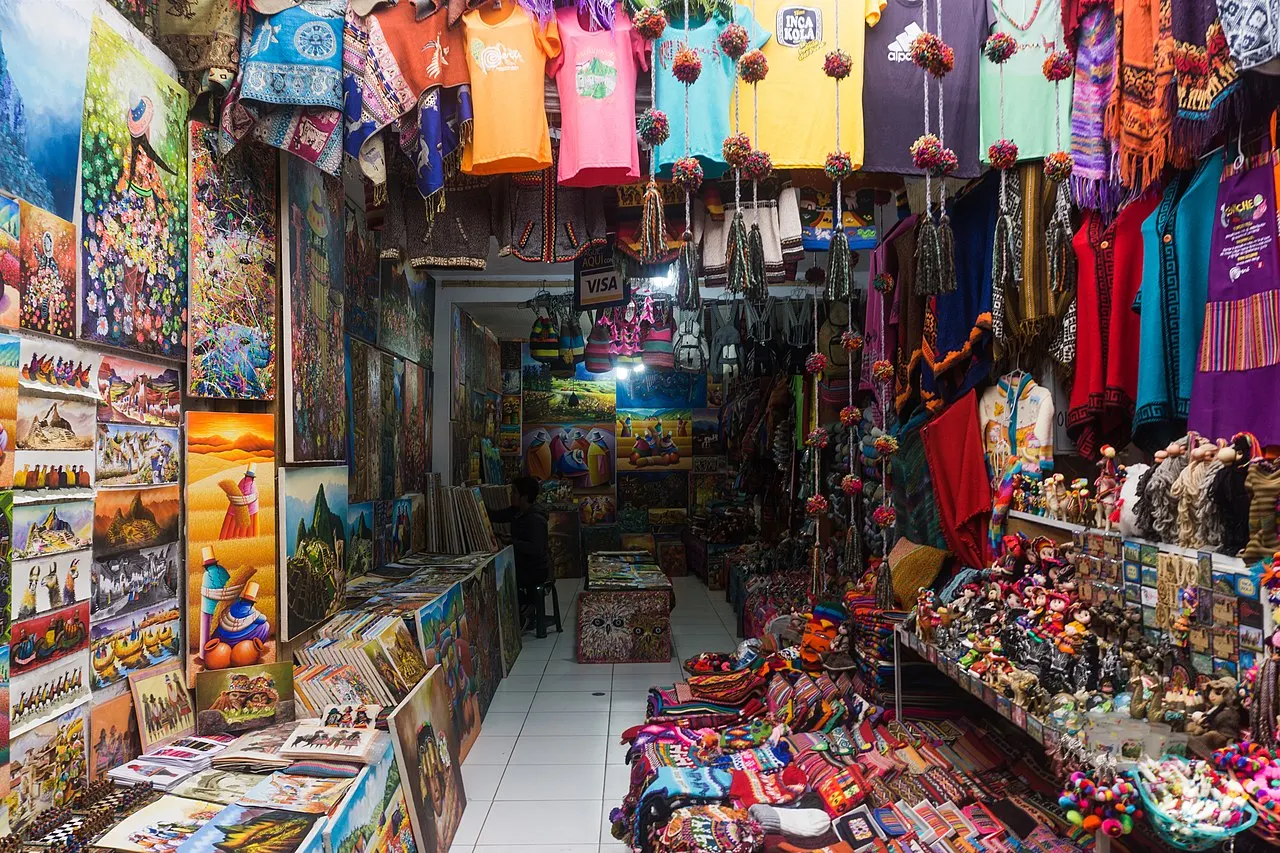
Pisac's market is the most famous in the Sacred Valley, and on its busiest days it fills the plaza and the streets around it with stalls of textiles, alpaca knits, silver, ceramics, carvings and produce. Historically the market peaked on certain days of the week when villagers came down from the hills to trade, and those remain the liveliest, most colourful times to visit; on other days a smaller permanent craft market still runs through the centre. Because the schedule and the balance of tourist craft versus local trade can shift, it is worth checking the current rhythm before you build a day around it.
Treat it as a place to browse and to soak up the colour rather than a guaranteed bargain hunt — much of it is geared to visitors now. Prices are negotiable in the friendly Andean way; a smile and a little patience go further than hard bargaining. Whatever the day, the market makes a lovely, low-effort hour or two paired with the ruins above and a long lunch in one of the town's cafés.
The ruins above town
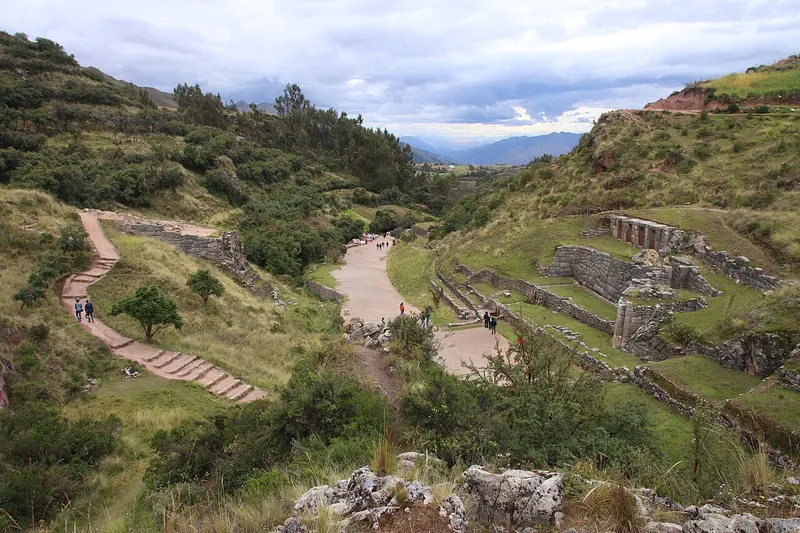
The other half of Pisac, and the half that lingers longest in the memory, is the archaeological complex high on the ridge above the town. It is one of the largest and most spectacular Inca sites in the valley: sweeping curved agricultural terraces, a fine ceremonial sector with an Intihuatana (a carved ritual sun stone, like the famous one at Machu Picchu), military and residential areas, and a cliff face opposite riddled with hundreds of ancient tombs. The setting — strung along a knife-edge ridge with the valley falling away on both sides — is breathtaking.
You can reach the ruins by road from the upper entrance (most day tours and taxis do this) or on foot by a steep trail climbing directly from the town, which takes a couple of hours and is a rewarding hike for the fit and acclimatized. Either way the site deserves real time — this is no quick photo stop — which is the strongest argument for treating Pisac as more than a half-hour market pause. It has its own full guide; the essentials are below.

Cafés, wellness and the bohemian streak
Pisac has, over the years, drawn a community of artists, healers and seekers, and the town carries a distinct wellness-leaning, bohemian flavour as a result. Around the plaza and the lanes off it you will find vegetarian and vegan cafés, juice bars, bakeries turning out good bread and empanadas, yoga studios and retreat centres, and shops selling crystals, textiles and craft alongside the market staples. It is a softer, slower, more international atmosphere than the working towns down-valley, and many travellers find it an unexpectedly restful place to pause.
For day-trippers this simply means Pisac is a pleasant place to eat well and linger after the market and ruins. For those staying longer it can be a genuine draw in itself — a place to slow down, decompress and acclimatize gently before the bigger days ahead. As always at altitude, ease into your first day, drink plenty of water, and pack a warm layer: clear evenings cool fast once the sun leaves the valley.
Is Pisac worth a full day before Machu Picchu?
The honest answer depends on how much time you have and what kind of trip you are taking. If your days are tight and the citadel is the whole point, Pisac is easy to fold into a single Cusco day tour — market, a look at the ruins, lunch — without staying overnight, and that is how most visitors experience it. The town sits at the wrong end of the valley for an early Ollantaytambo train, so it is rarely the most efficient base for a citadel-focused trip pressed for time.
But if you are giving the Sacred Valley its own days, Pisac earns a full one. The ruins genuinely reward a half-day on their own, the market and cafés fill the rest, and the town's calmer pace makes a restful counterpoint to the logistics of the citadel. A common and very satisfying plan is to do Pisac at the start of a valley loop — coming straight from Cusco at the eastern end — then work westward through Urubamba and Maras–Moray toward Ollantaytambo and the train, descending in altitude as you go. Done that way, Pisac is not a detour but the perfect opening chapter of the valley.
- Tight, citadel-focused trip: do Pisac as a half-day on a Cusco day tour, no overnight needed.
- Valley-focused trip: give it a full day — the ruins alone reward a half-day, plus market and cafés.
- Smart routing: start at Pisac (eastern end), then move west to Urubamba and Ollantaytambo for the train.
- Remember: Pisac has no Machu Picchu station and is the farthest main base from the Ollantaytambo train.
- Verify current market days, ruins hours and the boleto turístico details before you go.



Related guides

Pisac Ruins: Terraces, Temples & Cliff Tombs
How to visit the great cliffside Inca complex above Pisac — the ticket you need, the sweeping terraces, the Intihuatana sun temple, the cliff tombs, the steep hike from town, guide advice and how to pair the ruins with the market.
Read guide
The Sacred Valley: A Complete Guide
The lower, warmer valley of the Río Urubamba — Písac, Ollantaytambo, Maras and Moray — where most trips stage before the train to the citadel. Why it sits below Cusco, how its towns differ, where to sleep and eat, and how it links to Machu Picchu.
Read guideWhere to Stay in the Sacred Valley
A base-by-base guide to sleeping in the Sacred Valley before Machu Picchu — Ollantaytambo, Urubamba, Yucay, Písac and the luxury riverside lodges — chosen for altitude comfort, train access and the kind of trip you're taking.
Read guideMore in Sacred Valley
6
Best Hotels in the Sacred Valley
A curated shortlist of where to sleep in the Sacred Valley before Machu Picchu — sorted by what each does best: shortest train day, gardens and acclimatization comfort, family space, honeymoon luxury and value.
Read guide
Chinchero: Weaving, Terraces & the High Plateau
The 'birthplace of the rainbow' on the plateau above the Sacred Valley — its living weaving tradition, the church built on Inca foundations, the terraces, the Sunday market, and how the new airport and a valley loop fit around it.
Read guide
Family Hotels in the Sacred Valley
Where families should sleep in the Sacred Valley before Machu Picchu — garden resorts with lawns and pools, family rooms, easy meals, low-altitude comfort and smooth train-day logistics.
Read guide
Hiring a Private Driver in the Sacred Valley
When a private driver beats a group tour in the Sacred Valley — the flexibility, the off-road plateau sites, families and luggage, citadel-morning transfers, and realistic route ideas with honest timing.
Read guide
Luxury Sacred Valley Hotels
The Sacred Valley's high-end lodges, spa retreats and honeymoon bases — destination hotels where pampering doubles as low-altitude acclimatization before Machu Picchu.
Read guide
Maras & Moray: A Half-Day Route
A practical half-day plan for combining Moray's circular Inca terraces and the Maras salt pans — from Cusco or a Sacred Valley base. Transport options compared, the best order, timing for light and crowds, tickets, altitude notes and how to add it to a bigger valley day.
Read guide