
Best Hotels in the Sacred Valley
A curated shortlist of where to sleep in the Sacred Valley before Machu Picchu — sorted by what each does best: shortest train day, gardens and acclimatization comfort, family space, honeymoon luxury and value.

Photo: Silvia Fang / Unsplash
- ✓The 'best' valley hotel depends entirely on the job you need it to do — a calm early-train day, low-altitude acclimatization, room for kids, or a honeymoon splurge.
- ✓Ollantaytambo wins on train logistics; Urubamba and its countryside win on range, gardens and grandeur; Yucay and Písac win on character.
- ✓Garden, lawn and low-altitude comfort matter more here than almost anywhere, because you are sleeping while your body adjusts to the Andes.
- ✓Book the Machu Picchu entry ticket and train first, then choose the hotel around them — not the other way round.
What 'best' means in a valley like this
There is no single best hotel in the Sacred Valley, and any guide that pretends otherwise is selling you something. The valley is a staging ground for Machu Picchu as much as a destination in its own right, which means the right place to sleep depends on what your trip actually needs from it. A couple on a tight three-day citadel run want something close to the Ollantaytambo train; a family with young children wants a lawn, a pool and a kitchen that does early dinners; honeymooners want a riverside lodge with a spa; a backpacker wants a clean, warm bed and a courtyard. These are different best answers, and the smart way to read this page is to find the row that matches your trip.
What every good valley hotel shares, though, is a quiet awareness of altitude. You are not simply choosing somewhere pretty — you are choosing where to sleep while your body adjusts to the thin Andean air. The valley floor's lower elevation, around 2,800 m against Cusco's 3,399 m, is the whole reason staging here works, and the better hotels lean into it with oxygen on hand, coca tea in the lobby, gentle grounds you can walk slowly, and food that does not over-tax you on arrival. We have organised the shortlist below by the job, not by a meaningless overall ranking.

At a glance — best for each kind of traveller
Find your row, then read the section that follows. Everything to do with current prices and exact availability moves, so treat this as evergreen orientation and confirm specifics when you book.
- Best for the shortest, calmest train day → a hotel in central Ollantaytambo, walkable to the station.
- Best for gardens and acclimatization comfort → a countryside property on the Urubamba valley floor with grounds you can stroll.
- Best for families → a resort with a lawn, a pool, connecting or family rooms and a flexible kitchen near Urubamba.
- Best for honeymoons and special occasions → a riverside luxury lodge with a spa and Andean dining.
- Best for character on a budget → a courtyard guesthouse in Ollantaytambo or Písac.
- Best for valley sightseeing reach → anywhere central in Urubamba, minutes from Maras, Moray, Písac and the train.
Best for the train day — Ollantaytambo
If your trip hinges on catching an early train to Machu Picchu, the best hotel is the one you can almost roll out of bed and onto the platform from. Ollantaytambo is the main rail departure point for the citadel, and a room in the compact old town turns the most fraught part of any Machu Picchu day into a short walk or a five-minute transfer. There is no Cusco traffic to fight, no intercity drive to mistime — just the station, a few hundred metres away, and a calm morning before the gorge.
The best of Ollantaytambo's hotels make a virtue of the setting. The strongest options are characterful mid-range and boutique places built into or beside the Inca canchas, with courtyards, thick adobe walls and views up to the terraced fortress; the best of them will hold breakfast or arrange an early bite to fit a dawn train, and store your large bag while you are at the citadel. What you give up is scale — Ollantaytambo does not do sprawling resorts or vast spas — but for a one-night staging stop before the climb, proximity beats grandeur every time.
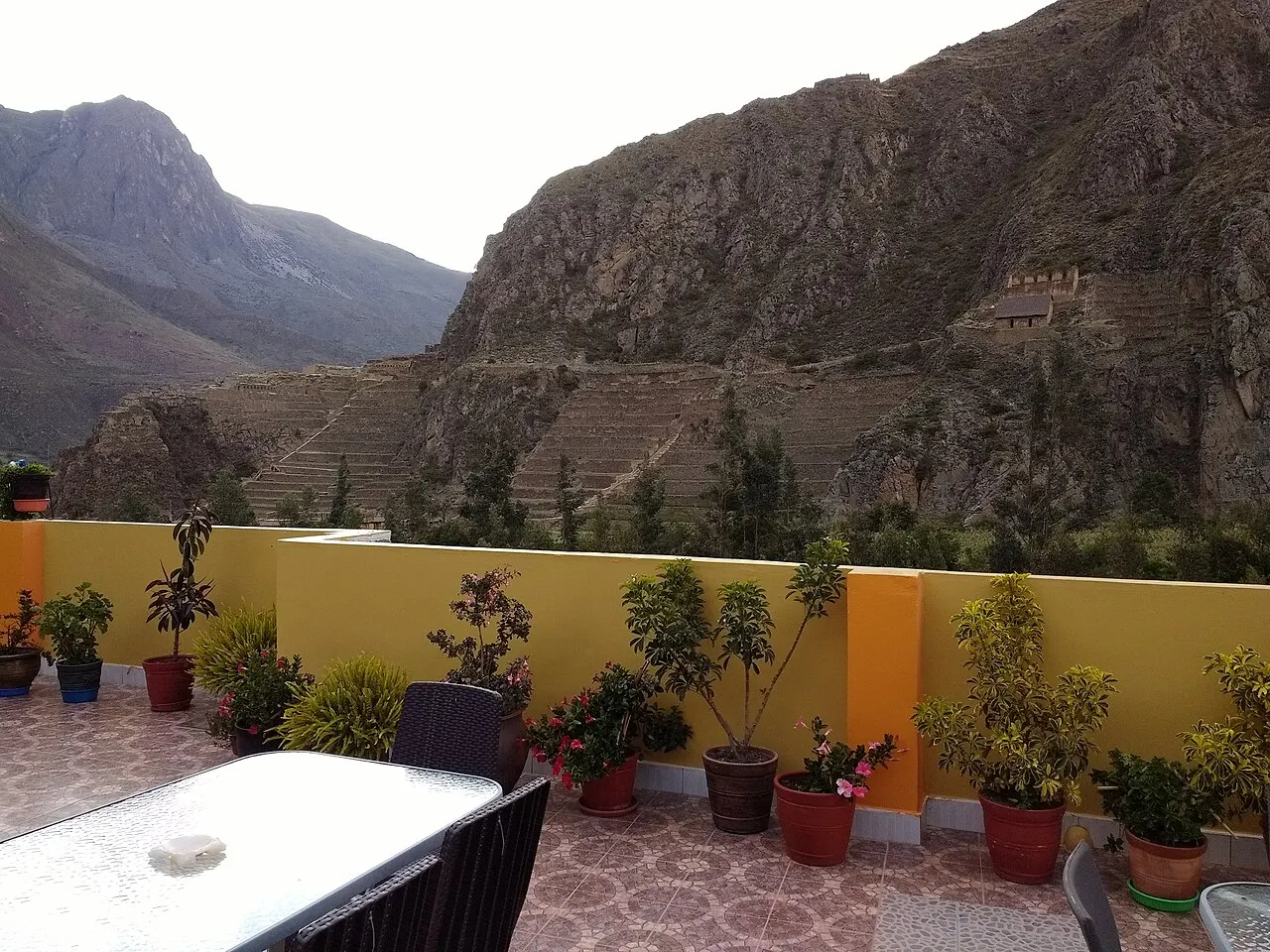


Best for gardens and acclimatization — the Urubamba countryside
For the traveller whose main aim is to arrive at the citadel rested and well-adjusted, the best hotels sit in the open countryside around Urubamba, on the lower valley floor. These are properties with real grounds — lawns, kitchen gardens, fruit trees, paths along irrigation channels — where the point of the stay is to do very little, slowly, while your body settles into the altitude. Sleeping at the valley's lower elevation rather than up in Cusco is itself an acclimatization strategy, and a hotel with space to stroll gently amplifies it.
The best of these places treat altitude seriously without making a fuss of it: oxygen available on request, herbal and coca teas, unhurried check-in, and Andean food cooked to nourish rather than overwhelm a newly arrived stomach. Many also sit perfectly for sightseeing, with Maras, Moray, Písac and the Ollantaytambo train all within an easy drive, so you can balance restful mornings in the garden with afternoons out in the valley. This is the category most well-rounded couples and independent travellers land on — comfortable, central, and kind to the body.
Best for families — resorts with room to roam
Travelling with children changes the brief entirely. The best family hotels in the valley are the ones with space to burn off energy and a kitchen that bends to a child's hunger clock — a lawn for running, a pool for the warm afternoons, family or connecting rooms, and a flexible, early-dinner-friendly restaurant. The resorts and larger garden hotels in the Urubamba and Yucay area do this best, with grounds big enough that kids can be kids while parents recover from the altitude on a lounger nearby.
Two practical things make a family hotel genuinely good here rather than just large. The first is altitude care: children can feel the height too, so a property on the lower valley floor with oxygen on hand and easy, level grounds is worth more than a dramatic clifftop view. The second is logistics: somewhere that will store your bags, arrange transfers to the Ollantaytambo train, and feed everyone before an early departure removes most of the friction of a family Machu Picchu day. The best ones do all three without being asked twice.

Best for honeymoons and occasions — the riverside lodges
When the trip is a honeymoon, an anniversary or simply a once-in-a-lifetime splurge, the best valley hotels are the destination lodges along the river — properties with spas, thermal-style soaking, private terraces, observatories trained on the famously clear Andean sky, and restaurants serving tasting menus drawn from the valley's own produce. Here the hotel is not a base you pass through but a reason to come, and a night or two before the citadel becomes its own romantic chapter rather than mere logistics.
These lodges also happen to sit at the valley's kinder altitudes, so the pampering doubles as acclimatization: you soak, sleep low and eat well while your body adjusts. The trade-off is that you are somewhat cocooned from town life — wandering cobbled lanes means a drive — but for travellers who want the valley to feel like a sanctuary, that seclusion is the point. We cover these in full on the dedicated luxury page.

Best for value and character — guesthouses and small hotels
Not every memorable valley stay costs a fortune. The best value in the Sacred Valley comes from the family-run guesthouses and small hotels of Ollantaytambo and Písac — courtyard places with thick adobe walls, home-cooked breakfasts, and owners who will happily talk you through the train and the trails. In Ollantaytambo you get character plus train proximity; in Písac you trade a little distance from the rails for the market, the high terraces and the town's gently bohemian streak.
What to look for at this end of the range is warmth, in both senses: a genuinely heated or well-blanketed room, because clear valley nights turn cold fast, and a host who understands the rhythm of a Machu Picchu trip — early starts, luggage storage, transfers to the train. The best budget options here are not stripped-back hostels but small, characterful places that punch well above their price, and for many independent travellers they are the most enjoyable way to sleep in the valley.
How to actually pick — and book in the right order
Once you know which job your hotel needs to do, the booking sequence matters as much as the choice. Machu Picchu runs on a timed-entry ticket tied to a specific circuit and route, and in the dry-season peak those slots — and the morning train seats and the best hotels — all sell out weeks ahead. So lock the citadel ticket first, then the train around it, then the valley hotel around both. Choosing a wonderful hotel and then discovering your train no longer lines up with it is the avoidable mistake here.
Beyond that, a handful of features separate a merely nice valley hotel from a genuinely useful one: free storage for the large bag you cannot take on the train; an early breakfast or packed option for a dawn departure; help arranging the transfer to Ollantaytambo station; oxygen and herbal teas for the altitude; and warm rooms for the cold nights. Ask about these specifically when you book — they are the difference between a hotel that simply houses you and one that smooths the whole Machu Picchu day.
- Book in order: Machu Picchu entry ticket → train → valley hotel.
- Prioritise free large-bag storage and an early-breakfast or packed option for the train.
- Ask about oxygen, coca/herbal tea and warm rooms — altitude and cold are the valley's two constants.
- Confirm current prices, availability and train times directly with hotels and rail operators.


Reading the towns through their hotels
Because the valley's hotels are scattered across distinct towns, the best property and the best location are tied together — you cannot really separate the two. In Ollantaytambo, the strongest stays are characterful boutique and mid-range places woven into the Inca canchas, and their virtue is proximity to the train as much as their courtyards and fortress views. In and around Urubamba, the best hotels are the countryside garden properties and the destination lodges, whose virtue is grounds, comfort and reach into the wider valley. In Yucay, the standouts are the colonial-hacienda conversions, all chapels and flower-heavy courtyards. In Písac, the best are the small, wellness-leaning guesthouses near the market and the high terraces.
This is why a flat 'top ten' misleads in the Sacred Valley: a hotel's excellence is inseparable from where it sits and the trip it suits. A perfect Ollantaytambo guesthouse would be the wrong choice for a family wanting a pool, and a magnificent riverside lodge would frustrate a budget traveller chasing the earliest train. Read the town first, then the property — that is the order that produces a stay you are genuinely glad of.
Altitude comfort — the feature you can't see in photos
The single most underrated quality of a good valley hotel does not show up in the gallery. It is how well the place handles altitude. The Sacred Valley floor sits around 2,800 m — kinder than Cusco's 3,399 m, but still high enough that a newly arrived traveller can feel it. The best hotels respond quietly and well: oxygen available on request, coca and herbal teas in the lobby, an unhurried check-in that lets you sit and breathe, and a kitchen that cooks to nourish a tired body rather than overwhelm it. None of this is glamorous, and all of it matters on your first night in the Andes.
When you are weighing two otherwise similar hotels, let altitude care break the tie. Ask whether oxygen is on hand, whether the grounds are level enough to stroll gently, and whether the restaurant does lighter Andean fare. A hotel that takes the height seriously is not coddling you — it is helping ensure you reach the citadel rested and present rather than headachy and rushed, which is, after all, the whole reason you staged in the lower valley in the first place.
- Favour hotels on the lower valley floor with level, walkable grounds.
- Confirm oxygen and herbal/coca teas are available on request.
- Keep the first day gentle; let the body adjust before climbing anywhere.
- Lighter Andean cooking is kinder than a heavy meal on arrival.


Related guides

Luxury Sacred Valley Hotels
The Sacred Valley's high-end lodges, spa retreats and honeymoon bases — destination hotels where pampering doubles as low-altitude acclimatization before Machu Picchu.
Read guide
Family Hotels in the Sacred Valley
Where families should sleep in the Sacred Valley before Machu Picchu — garden resorts with lawns and pools, family rooms, easy meals, low-altitude comfort and smooth train-day logistics.
Read guide
Where to Stay in the Sacred Valley
A base-by-base guide to sleeping in the Sacred Valley before Machu Picchu — Ollantaytambo, Urubamba, Yucay, Písac and the luxury riverside lodges — chosen for altitude comfort, train access and the kind of trip you're taking.
Read guideMore in Sacred Valley
6
Chinchero: Weaving, Terraces & the High Plateau
The 'birthplace of the rainbow' on the plateau above the Sacred Valley — its living weaving tradition, the church built on Inca foundations, the terraces, the Sunday market, and how the new airport and a valley loop fit around it.
Read guide
Hiring a Private Driver in the Sacred Valley
When a private driver beats a group tour in the Sacred Valley — the flexibility, the off-road plateau sites, families and luggage, citadel-morning transfers, and realistic route ideas with honest timing.
Read guide
Maras & Moray: A Half-Day Route
A practical half-day plan for combining Moray's circular Inca terraces and the Maras salt pans — from Cusco or a Sacred Valley base. Transport options compared, the best order, timing for light and crowds, tickets, altitude notes and how to add it to a bigger valley day.
Read guide
Moray: The Inca's Circular Terraces
The concentric terraced bowls on the plateau above the Sacred Valley — what they are, the leading theory that they were an Inca agricultural laboratory, the microclimates between the rings, how to get there, the Boleto Turístico, time needed, and pairing with the Maras salt pans.
Read guide
Ollantaytambo: A Living Inca Town Guide
The Sacred Valley's most atmospheric staging base — a fortress town where the Inca street grid is still lived in, the train to Machu Picchu departs, and an early citadel morning becomes a short walk to the platform.
Read guide
Písac Market: Textiles, Crafts & Etiquette
The famous artisan market in the Sacred Valley town of Písac — what to buy, how the timing and bargaining work, telling handwoven from machine-made, and how to fit the market and the hilltop ruins into one day.
Read guide