
Santa Teresa to Machu Picchu
The warm, low-valley town that anchors the budget back door — its Cocalmayo hot springs, the Hidroeléctrica connection, the road risk, and whether a night here belongs in your trip.

Photo: Gonzalo Kenny / Unsplash
- ✓Santa Teresa is a low, warm valley town (around 1,550 m) on the budget approach — a common waypoint between Cusco and the Hidroeléctrica trailhead to Aguas Calientes.
- ✓Its draw is the Cocalmayo hot springs by the river, and it doubles as the finish line of the Inca Jungle trek (rafting, ziplining, biking, walking).
- ✓It is not on the railway — you still reach the citadel via Hidroeléctrica and the riverside walk, then a night in Aguas Calientes.
- ✓The mountain roads in are winding and wet-season-prone to landslides; this is a budget-and-time choice, not a fast one.
Why Santa Teresa is on the map at all
Santa Teresa is not somewhere you pass on the way to Machu Picchu by accident — it sits off the rail line entirely, down in a humid, coffee-growing valley far below Cusco's thin air. Travellers end up here for two reasons: it is a natural overnight on the budget Hidroeléctrica approach, and it is the warm, celebratory endpoint of the Inca Jungle trek. Either way, it is a place defined by what comes after it: the walk into the gorge and the citadel beyond.
What makes a night here more than a logistics stop is the valley itself. After Cusco's altitude and the jolting mountain road, Santa Teresa is low, green and forgiving — the kind of place where you peel off a layer for the first time in days and let the river noise do the rest.
The Cocalmayo hot springs
The reason most people remember Santa Teresa is Cocalmayo — a set of natural thermal pools set right beside the river a short ride out of town. After a long road day or the final stage of a trek, the warm water against cool valley air is exactly the kind of small luxury a budget trip rarely affords. It is the antidote to everything stiff and dusty about getting here, and it is the single best argument for actually stopping rather than rushing through.
It is an easy, low-key stop — no altitude to fight, no schedule to keep beyond the last transport back. If your itinerary already routes you through Santa Teresa, building in time for the springs turns a transit night into something you'll be glad you did.
- Cocalmayo: natural riverside thermal pools, a short transfer from the town centre.
- Low and warm (~1,550 m) — a genuine rest after Cusco's altitude.
- Especially welcome as the Inca Jungle trek's reward leg.
- Hours, fees and transport change — confirm locally on the day.

How Santa Teresa connects to the citadel
Here is the crucial thing to understand: Santa Teresa does not put you at Machu Picchu's door. There is no train from here. To reach the citadel you continue to the Hidroeléctrica station, then walk the roughly 10–11 km (about 2.5–3 hours) of flat railside path into Aguas Calientes, sleep there, and take the bus up to your timed slot the next morning. Santa Teresa is a comfortable, warm staging point on that chain — not a substitute for any link in it.
Because of that, a Santa Teresa night usually adds a day rather than saving one. People build it in deliberately: to break up the long road from Cusco, to soak in the springs, or because their trek delivers them here. If your priority is speed, it is the wrong stop. If your priority is a cheaper, slower, more sensory route, it earns its place.
- No railway in Santa Teresa — the citadel is still reached via Hidroeléctrica + the riverside walk.
- Plan an Aguas Calientes overnight after the walk; the citadel is the morning after.
- Adds a day rather than saving one — choose it for the experience, not the speed.
- You still need a timed-entry citadel ticket booked ahead.

Road risk and the right season
The roads into this valley are mountain roads — winding, partly unpaved, and exposed to the weather. In the wet season (roughly October to April, worst around January and February), landslides and rockfall can close them, and a budget route has no rail fallback to rescue a missed connection. Because your citadel ticket is timed and largely non-flexible, a road that strands you can cost you the entry you booked. The dry season (roughly May to September) is firmer, clearer and far more reliable.
Whenever you go, give yourself a buffer day, use reputable transport, and watch local conditions. Santa Teresa rewards the unhurried traveller — and the buffer that makes the unhurried route work is exactly what protects your slot if the road misbehaves.
- Wet season (Oct–Apr): elevated landslide and closure risk on the approach roads.
- Dry season (May–Sep): the safer, more reliable window.
- Build a buffer day to protect a timed citadel slot against road delays.
- Use reputable operators; check current conditions before setting off.
Does Santa Teresa belong in your trip?
Decide by what you want from the journey. If you are already on the Hidroeléctrica budget route or finishing the Inca Jungle trek, a Santa Teresa night is a natural, pleasant addition — the springs alone justify it. If you are short on days, taking the train, or visiting in the heart of the rains, it adds time and road risk you don't need. It is a destination for travellers who treat the getting-there as part of the trip, not a box to tick.
- Good fit: budget travellers, Inca Jungle trekkers, anyone wanting a warm, low rest stop.
- Skip it if: you're train-bound, time-pressed, or travelling in peak wet season.
- Book the citadel ticket first; route the valley stop around it.
Getting to Santa Teresa: the routes in
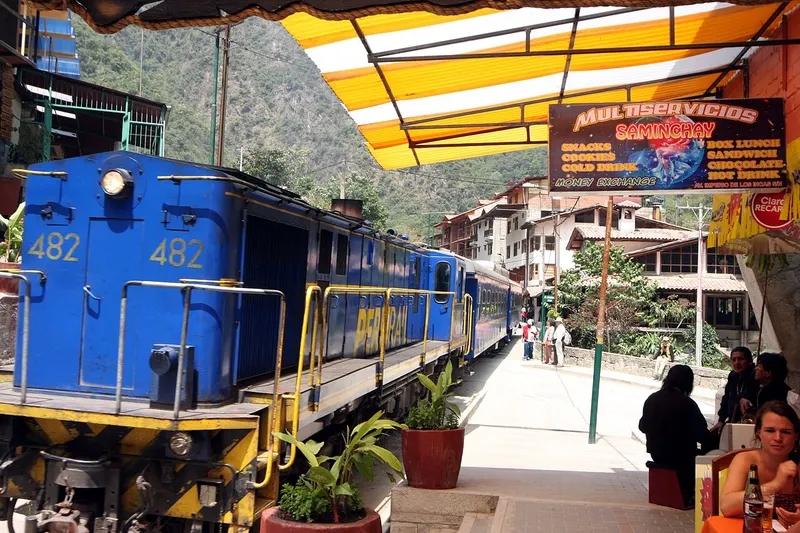
Santa Teresa sits in the warm, low Sacred Valley fringe below Machu Picchu, and there is no train to it — getting there is a road journey followed, usually, by a walk. The common route from Cusco is a long road transfer (typically six to seven hours by shared van or private car) over the Abra Málaga pass and down through the cloud forest to Santa Teresa, with the road dropping thousands of metres along the way. From Santa Teresa, most travellers continue to the Hidroeléctrica station, then walk the flat railway-side path roughly 10–11 km (two and a half to three hours) into Aguas Calientes, where the citadel proper is reached the next morning.
The reverse is just as common: trekkers finishing the Inca Jungle route arrive in Santa Teresa overland, having biked, rafted and zip-lined their way down from the high passes. Either way, Santa Teresa is a hinge point rather than a final stop — a place to sleep, soak and regroup before the last push to the citadel. Because the whole approach hangs on mountain roads through wet terrain, it is sensitive to landslides and washouts, especially in the rainy months, which is the single biggest reason to treat it as a route for travellers with time and flexibility rather than a tight schedule.
- From Cusco: a long road transfer (~6–7 hours) over Abra Málaga and down to Santa Teresa — no train serves the town.
- Onward: van or walk to Hidroeléctrica, then a flat ~10–11 km railside walk (2.5–3 hours) to Aguas Calientes.
- Inca Jungle trekkers reach Santa Teresa overland as part of the bike-raft-zipline route.
- Mountain roads through wet terrain mean real landslide risk — build buffer time, especially Nov–March.
The Cocalmayo hot springs and what else there is to do
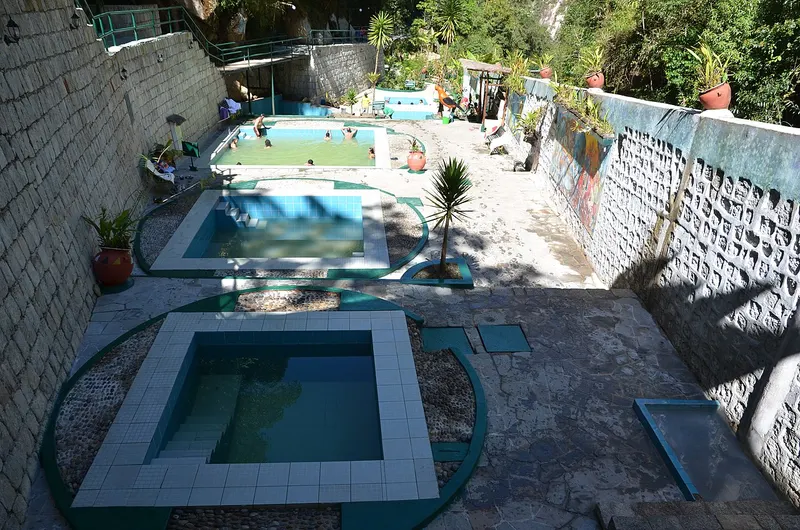
The reason most travellers willingly add a Santa Teresa night is the Cocalmayo hot springs — a set of natural thermal pools terraced beside the Vilcanota river a short ride from town. Unlike the more developed, often-crowded baths at Aguas Calientes, Cocalmayo is open-air, set among greenery and rock, with pools at different temperatures fed by genuinely hot mineral water. After a long road day or a hard trek, a soak here at dusk, with the river rushing past and the cloud forest closing in overhead, is the kind of simple pleasure that justifies the detour on its own.
Beyond the springs, Santa Teresa is a small, low-key place rather than a sightseeing destination. The surrounding valley grows coffee, cacao and fruit in the warm microclimate, and some farms offer informal tastings or tours — a gentle, grounding contrast to the high, thin air of Cusco. Adventure operators run zip-lines and rafting nearby for those who want them. But the town's real role is as a comfortable, warm base: low enough that altitude is a non-issue, quiet enough to rest, and close enough to the citadel to make the final approach easy.
- Cocalmayo hot springs: open-air thermal pools by the river — the main draw, calmer than the Aguas Calientes baths.
- Warm, low microclimate grows coffee and cacao; some farms offer informal tastings.
- Zip-lining and rafting are available nearby for adventure travellers.
- Low altitude makes Santa Teresa a restful base with no acclimatization worries.


Related guides

The Hidroeléctrica Budget Route to Machu Picchu
The backpacker's back door — a long minivan ride to the Hidroeléctrica station, then a flat riverside walk to Aguas Calientes. What it costs you in time, the rain and landslide risk, and who should skip it.
Read guide
How to Get to Machu Picchu
No road reaches the citadel. The realistic ways in compared — the train from Ollantaytambo, the classic and alternative treks, the budget Hidroeléctrica route, and the shuttle bus up from Aguas Calientes.
Read guide
Rail, Bus & Protest Disruptions at Machu Picchu
How to build buffers and backups around the things that go wrong — rail suspensions, bus disputes, weather and landslides, strikes, and missed connections — so a timed citadel slot survives the unexpected.
Read guideMore in Getting There
6
Aguas Calientes bus to the citadel
How the shuttle bus from Aguas Calientes (Machu Picchu Pueblo) up to the citadel gate works — buying tickets, the morning queue, timing it to your entry slot, and the walking alternative.
Read guide
Cusco airport to city & valley
Getting from Cusco's Velasco Astete airport to your hotel or the Sacred Valley — taxi, pre-booked transfer or hotel pickup — plus the altitude-first question of where to head after you land.
Read guide
Cusco to Machu Picchu: Every Way to Make the Journey
The realistic ways from the old capital to the citadel — train, bimodal bus-and-train, staging in the Sacred Valley, the long Hidroeléctrica back door, and whether a one-day round trip is sane.
Read guide
Cusco to Ollantaytambo
The ways to cover the road from Cusco to the rail gateway at Ollantaytambo — private driver, shared colectivo, tour transfer and taxi — plus the baggage strategy that saves you on the train.
Read guide
Lima to Cusco to Machu Picchu
Why getting from Lima to Machu Picchu is a staged journey, not a single hop — the flight to Cusco, the altitude jump, where to stage, and how to pace it so the citadel day actually works.
Read guide
Luggage Rules & Storage for Machu Picchu
Train baggage limits, where to leave the big bag in Cusco or Ollantaytambo, what to carry into the citadel, station storage in Aguas Calientes, and the trek-duffel system.
Read guide