
The Sun Gate (Intipunku): Views & the Inca Trail Arrival
Intipunku from the citadel side — the Inca Trail's grand finish, the out-and-back climb for ticket holders, seasonal access and the panoramic view back over the sanctuary.
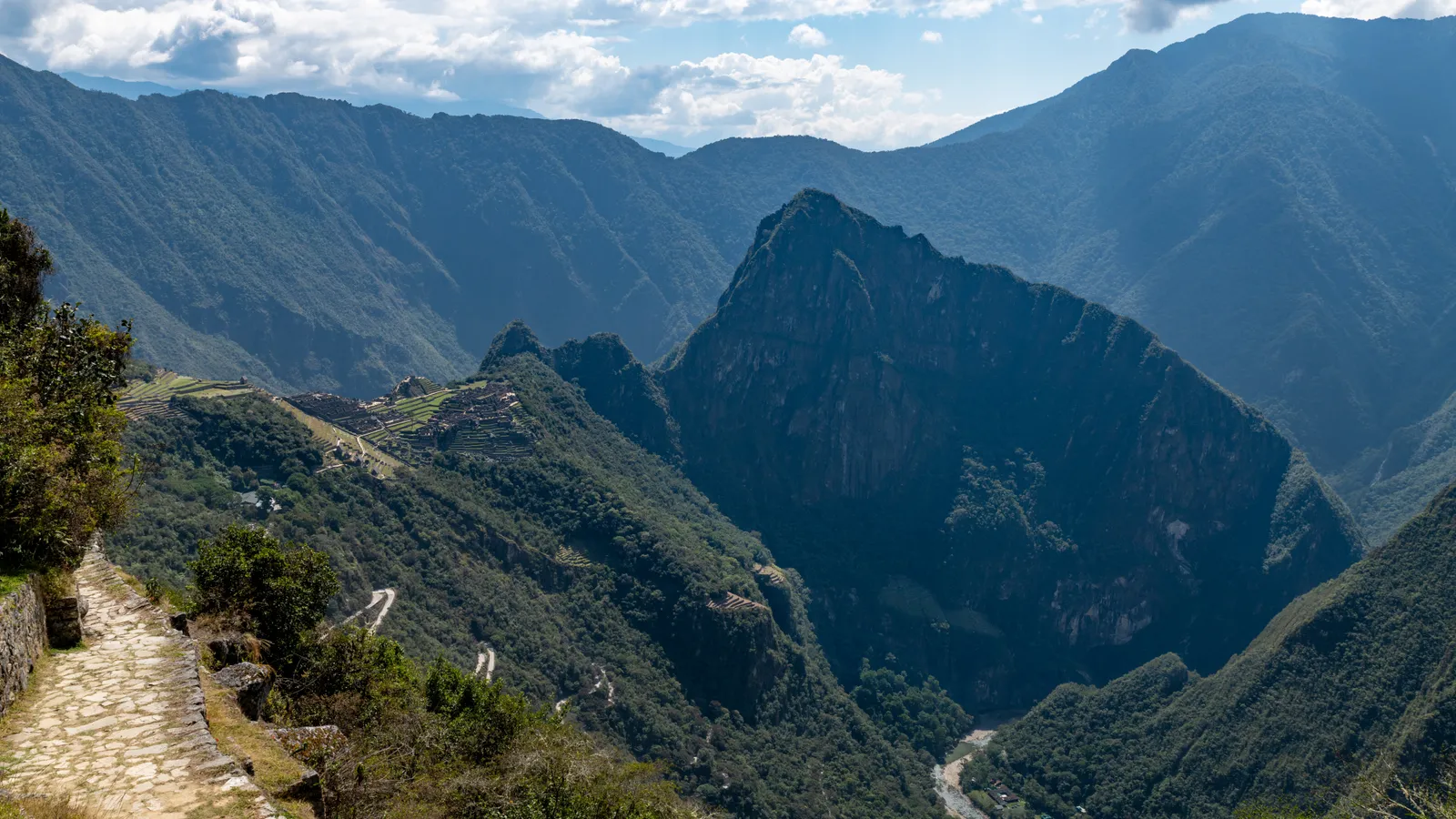
Photo: Christoph Strässler / Wikimedia Commons · CC BY-SA 2.0
- ✓Intipunku — Quechua for 'Sun Gate' — is the original eastern gateway to the sanctuary, set high on the ridge above the citadel.
- ✓Classic Inca Trail trekkers crest it for their first, famous look down at Machu Picchu; ticket holders reach it on an uphill out-and-back from the city.
- ✓The walk is a real climb at altitude — count on roughly two hours round trip — and needs a ticket route that includes the Sun Gate path.
- ✓The gate is aligned to the solstice sunrise; dawn light is the reward, but cloud is common, so it is always a gamble — verify routing and timing.
The door the sun walks through
Intipunku means 'Sun Gate,' and the name is no flourish. The Inca built this stone gateway as the formal eastern entrance to the Machu Picchu sanctuary, set on a notch in the ridge high above the citadel, and they aligned it so that around the June solstice the rising sun streams straight through the gap. It is astronomy written into the mountain — a doorway calibrated to the turning of the year, framing the dawn for anyone standing in it on the right morning.
For everyone who walks the classic Inca Trail, this is the climax of the whole journey. After days of cloud forest, high passes and stone stairways, the trail tips over a final rise and there it is: the simple twin-doorway gateway, and beyond it, far below in the green, the entire citadel laid out like a secret finally kept. People weep at the Sun Gate. Months of anticipation, the ache in the legs, the cold dawn — all of it resolves into one framed view, and the city you have been walking toward for four days lies open beneath you at last.

Two ways to arrive at the gate
There are two quite different experiences of Intipunku, and which one is yours depends on how you reach Machu Picchu in the first place. This page is about the site side — the view back over the sanctuary — but the two arrivals are worth holding side by side, because they shape everything about the moment.
If you walk the classic Inca Trail, the Sun Gate comes to you. It is the trail's natural endpoint, the threshold you pass through on the final morning before descending into the citadel. Trekkers on the shorter two-day trail also finish at or near the gate. The arrival is the entire point: you do not climb up to a viewpoint, you walk down through it into the city, and the first sight of Machu Picchu is framed by Inca stone.
If you arrive by train and bus, Intipunku becomes an optional out-and-back from inside the site. You climb the old trekkers' route in reverse — out of the citadel, up the ridge, to the gateway, and back the same way. It is the same view, earned by a stiff morning's effort rather than a multi-day march. You need a ticket whose circuit and route include the Sun Gate path, which sits on the upper, panoramic side of the sanctuary; confirm the current routing when you book, because the post-2024 circuits define exactly which ticket reaches it. Verify.
- Trekkers: the Sun Gate is the Inca Trail's grand finale — no extra ticket beyond the trek permit.
- Ticket holders: choose a circuit/route that includes the Sun Gate path, then walk it out-and-back — verify routing.
- The two-day Inca Trail also finishes at or near the gate.
- Either way it is uphill on the way up to the gate; pace yourself for the altitude.

The walk and the view back
From the citadel, the route up to Intipunku is a steady, mostly graded climb along a broad Inca path that traverses the ridge to the south-east. It is not technical — no scrambling, no exposure to match the Inca Bridge — but it is genuinely uphill, and it is at altitude, so even strong walkers feel the air thin. Most people allow around two hours for the round trip, more if they linger at the top; plan your time so you are back inside your ticket window and down for your bus.
The reward builds with every metre. As you climb, the citadel slowly reveals itself from above and behind, with Huayna Picchu rising beyond it — a perspective most day visitors never see, because it is the trekkers' view in reverse. At the gate itself you look straight back down the sanctuary, the terraces and temples spread out like a scale model on the saddle. On a clear morning it is unforgettable; on a clouded one the view comes and goes with the drifting mist, which has a slow magic all its own. Either way you are standing in the doorway the Inca built for the sun, looking at one of the great views on earth.
- A broad, non-technical Inca path — but a real uphill at thin-air altitude.
- Round trip from the citadel typically runs about two hours; plan around your ticket and bus times.
- The payoff is the citadel from above and behind, Huayna Picchu rising beyond — the trekker's-eye view.
- Cloud is common; the view may clear and close repeatedly through the morning.

Seasonality, light and access
The Sun Gate's solstice alignment makes the days around 21 June the symbolic peak — the sun rising through the gap is the very thing the gate was built to mark — but it is also when the citadel is busiest, the dry-season skies clearest and the cloud lottery most in your favour. Through the broader dry season (roughly May to September) mornings tend to be clearer; the wet season (October to April) trades crowds and cost for greener slopes and a higher chance of cloud at the gate.
Practical access turns on two things you control and one you do not. You control your ticket route and your entry slot: pick a circuit that includes the Sun Gate path and an early enough window to make the round trip before your time runs out. You do not control the weather, so treat the dawn view as a gift rather than a guarantee. Note too that the classic Inca Trail — the route that delivers the famous trekker's arrival — closes every February for maintenance and the heart of the rains, so a February visitor reaches the gate only as a ticket-holder out-and-back, not as a trail finisher.
- Around 21 June the solstice sun rises through the gate — the alignment it was built for; also the busiest, clearest time.
- Dry season (May–September) favours clear mornings; wet season is greener but cloudier at the gate.
- The classic Inca Trail closes every February for maintenance — no trail arrival that month.
- Treat the dawn view as a gift, not a guarantee; build slack into your slot for slow-clearing cloud.

At a glance
A quick reference before you decide whether to fit the Sun Gate into your visit. Capacities, exact timings and route names change with official rules — treat what you find on official sources as current and verify.
- What it is: Intipunku, the original Inca eastern gateway to the sanctuary, on the ridge above the citadel.
- Access: included on the Inca Trail finish, or via a ticket route that contains the Sun Gate path — verify routing.
- Effort: moderate — a steady uphill out-and-back, typically about two hours round trip at altitude.
- Best light: dawn for the solstice-aligned gateway and the citadel waking below; cloud is common, so it is a gamble.
- Seasonality: the classic Inca Trail closes every February; dry-season mornings are clearest.
- Who it suits: trekkers (it is their finish line) and any ticket holder wanting the overhead view without the multi-day walk.
Worth the climb?
If you have the legs and the hours, yes. The Sun Gate gives you the one thing the standard circuits cannot: the citadel from above and behind, the angle that turns a famous ruin back into a hidden city in the mountains. It is also far quieter than the main overlook, and it costs nothing beyond effort if your ticket already includes the route. For trekkers it is not optional at all — it is the emotional summit of the whole journey, the door you walk through into the place you have dreamed of.
If your day is tight, your acclimatization shaky, or the morning has socked in with cloud, do not feel you have missed the heart of Machu Picchu by skipping it — the citadel's great set pieces are all below, around the Guardhouse overlook and the temples. But choose your ticket route deliberately, because you cannot add the Sun Gate path on a whim once you are inside the citadel. Pick the circuit that reaches it, give yourself the time, and let the gate do what it was built to do.



Related guides

Intipunku, the Sun Gate: How to Reach It
The Sun Gate above the citadel — the Inca Trail's grand entrance and a stiff out-and-back for ticket holders. How to reach it, the seasonality, the views and the effort involved.
Read guide
The Inca Trail to Machu Picchu: A Complete Guide
Walking the original Inca road to the citadel — the four-day classic and the short version, the permit, what each day holds, porters and ethics, the camps and ruins, and arriving through the Sun Gate at dawn.
Read guideMore in Highlights
6
A Rainy Day at Machu Picchu
Rain at the citadel is normal, not a disaster — how to dress for cloud forest, which circuits cope best, how to build train buffers, the Aguas Calientes backups, and why mist makes the most haunting photographs of all.
Read guide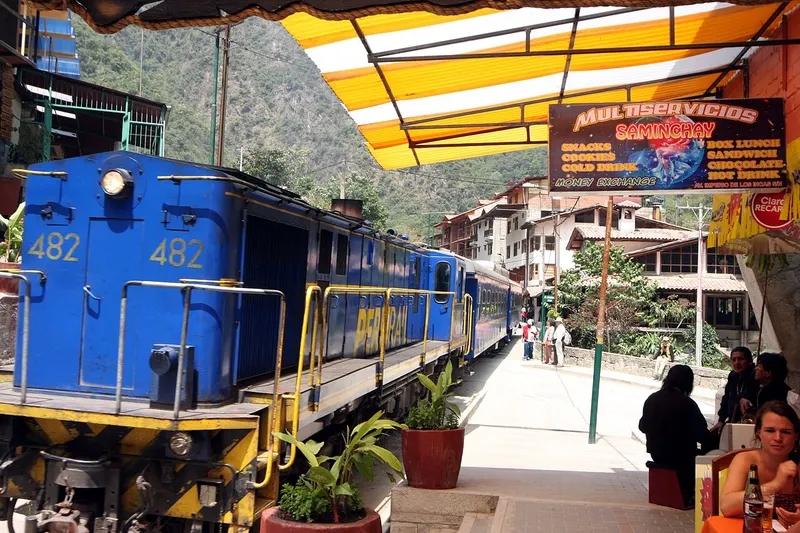
Aguas Calientes (Machu Picchu Pueblo): The Complete Guide
Aguas Calientes — officially Machu Picchu Pueblo — the cloud-forest town at the foot of the citadel. Where to sleep, how the trains and buses connect, the food, the hot springs, luggage, and how long to stay for a calmer entry.
Read guide
Around the Site: Machu Picchu Up Close
The hub for the world immediately around the citadel — what to see inside it, the town of Aguas Calientes below, where to stay, the first buses up, the hot springs, the restaurants, and how to visit responsibly.
Read guide
Best Photography Spots at Machu Picchu
Where the great Machu Picchu photographs are actually made — the classic upper-terrace frame, the llamas, the morning cloud, and which circuit reaches each angle. Plus the sunrise myth and what you simply cannot access.
Read guide
Budget hotels for Machu Picchu
Better-value places to sleep along the Machu Picchu route — honest guesthouses and well-run hostels in Cusco, Ollantaytambo and Aguas Calientes — chosen to stretch the trip without wrecking the altitude ladder or the citadel-morning logistics.
Read guide
Luxury hotels for Machu Picchu
The top-end stays that string together a polished Machu Picchu journey — restored monasteries and oxygen-equipped suites in Cusco, hacienda-and-spa retreats in the Sacred Valley, and the one true luxury option at the gate of the citadel itself.
Read guide